 Français
 Deutsch
 Italiano
 Português
 Español

Chè – Vietnamese Sweet Soups and the Sweet World of Traditional Vietnamese Desserts
Discover Chè, Vietnam’s diverse world of traditional sweet desserts. Explore popular Chè varieties, regional specialties, ingredients and tips for trying Vietnamese sweet soups like a local.
Vietnam is famous for its spectacular landscapes, vibrant cities, ancient traditions and, of course, its incredibly diverse cuisine. While dishes such as Pho, Banh Mi and fresh spring rolls are well known around the world, there is another side of Vietnamese food culture that international visitors often discover only after arriving in the country: Chè.
The word Chè refers to a fascinating family of traditional Vietnamese sweet dishes. Served hot or cold, Chè can contain beans, sticky rice, tropical fruits, tapioca pearls, lotus seeds, sweet potatoes, taro, coconut milk and colourful jellies. Some versions are simple and comforting, while others are elaborate combinations of different flavours and textures.
For many Vietnamese people, Chè is more than just a dessert. It is associated with childhood memories, family gatherings, traditional celebrations and hot summer afternoons spent at a local street stall.
If you are travelling to Vietnam and have a sweet tooth, trying Chè is an easy and delicious way to experience a lesser-known part of Vietnamese food culture.

What Is Vietnamese Chè?
If you hear the word Chè for the first time, you might assume that it has something to do with tea. In Vietnamese, however, tea is called trà, while Chè refers to a broad family of traditional sweet dishes.
There is no single English word that perfectly translates Chè. It is sometimes described as Vietnamese sweet soup, but this expression does not capture the full variety of the dessert. Some Chè dishes are soupy, while others resemble puddings, jellies, fruit desserts or sweet bean bowls.
Chè can be served hot, warm, chilled or over crushed ice, depending on the recipe and season.
Rather than being one specific dessert, Chè is best understood as a whole category of Vietnamese sweet treats.
A typical bowl might combine sweet beans, sticky rice, tapioca pearls and coconut milk. Another version might feature tropical fruits, colourful jelly and crushed ice. In Huế, you may encounter delicate desserts made with lotus seeds and longan, while in southern Vietnam, Chè often features abundant coconut milk and tropical fruits.
This diversity is one of the reasons why trying Chè can become such a fun part of travelling through Vietnam.

The Main Ingredients Used in Chè
One of the most interesting things about Vietnamese Chè is the variety of ingredients used to create different combinations of flavours and textures.
Common ingredients include:
|
Ingredient |
Description |
Taste and use |
|
Coconut milk |
Widely used, particularly in southern Vietnam |
Creamy, mildly sweet and aromatic |
|
Mung beans |
One of the most common ingredients |
Mild, slightly nutty and creamy |
|
Black beans |
Popular in chilled Chè |
Soft, mildly earthy and sweet |
|
Red beans |
Common in many Asian sweet desserts |
Soft, sweet and slightly nutty |
|
Lotus seeds |
Especially associated with Huế |
Delicate, mildly nutty and elegant |
|
Sticky rice |
Used in many warm Chè dishes |
Soft, chewy and filling |
|
Tapioca pearls |
Made from cassava starch |
Soft and chewy, adding texture |
|
Corn |
Particularly popular in Central Vietnam |
Naturally sweet and juicy |
|
Sweet potatoes & taro |
Common in warm Chè |
Soft, creamy and mildly sweet |
|
Jackfruit |
Popular tropical fruit |
Intensely fruity and aromatic |
|
Longan & lychee |
Often paired with lotus seeds |
Juicy, delicate and refreshing |
|
Pandan leaves |
Used as a natural flavouring |
Fragrant, floral and slightly vanilla-like |
|
Palm or cane sugar |
Used to sweeten Chè |
Adds sweetness and, in the case of palm sugar, a caramel-like note |
|
Crushed ice |
Essential for many chilled varieties |
Makes Chè refreshing on hot days |
The magic of Chè often comes from the combination of contrasting textures. A single bowl may contain soft beans, chewy tapioca pearls, creamy coconut milk, crunchy nuts and refreshing fruit.
For first-time visitors, this mixture can be very different from familiar Western desserts – and that is exactly what makes Chè worth trying.

The History and Cultural Significance of Chè
Chè has a long history in Vietnamese culinary culture. Sweet preparations made from ingredients such as beans, rice and grains have traditionally been associated with family meals, religious practices and festive occasions.
Over time, Vietnamese sweet dishes developed under a variety of cultural influences, including culinary traditions from neighbouring Asian countries. Vietnamese cooks adapted these influences using local ingredients and regional preferences, creating the enormous variety of Chè found today.
Ingredients such as coconut milk, pandan, lotus seeds, tapioca and tropical fruits became particularly important in Vietnamese versions.
Today, Chè is firmly embedded in everyday food culture. You can find it at traditional markets, street stalls, local dessert shops, night markets and modern cafés.
Different parts of the country have also developed their own specialties. Northern Chè tends to highlight beans, grains and lotus seeds, while Central Vietnam – especially Huế – is famous for refined traditional varieties. Southern Chè often makes generous use of coconut milk, tropical fruits and colourful ingredients.
For travellers, this means that trying Chè in different destinations can reveal another layer of Vietnam’s regional culinary diversity.

Why Do Vietnamese People Love Chè?
Chè is much more than something sweet to eat after a meal. For many Vietnamese people, it is connected to memories, social occasions and everyday life.
Chè Brings Back Childhood Memories
Ask many Vietnamese people about Chè and they will probably have a childhood memory associated with it.
Children may buy a bowl of Chè after school, share one with friends or enjoy it as a special weekend treat. Families also pass recipes from one generation to another, meaning that a particular Chè can remind someone of their parents, grandparents or hometown.
This emotional connection helps explain why Chè remains popular even as Vietnam’s food scene becomes increasingly modern.
A Dessert for Different Occasions
Chè can be enjoyed casually or served during special occasions.
It may appear after lunch or dinner, during family gatherings, at celebrations or as part of traditional and religious ceremonies. Certain varieties are also associated with particular festivals and symbolic meanings.
In this sense, Chè is not simply a dessert. It is part of the social and cultural fabric of Vietnamese food.

A Refreshing Treat on Hot Days
Vietnam’s tropical climate makes chilled desserts particularly appealing.
Cold Chè is often served with crushed ice, coconut milk, fruit and jelly, creating a refreshing combination of sweetness and coolness. On a hot afternoon in Hanoi, Huế or Ho Chi Minh City, sitting down with a bowl of chilled Chè can be a simple but memorable travel experience.
A Sweet Ending to a Meal
Chè can also be enjoyed as a dessert after a savoury meal.
Some varieties are light and fruity, while others are more substantial because they contain sticky rice, beans or root vegetables. This means there is a Chè for almost every appetite.
From Street Stalls to Modern Dessert Cafés
Chè has successfully moved between generations and settings.
Traditional street vendors continue to serve familiar recipes, while modern cafés have created new interpretations using ingredients, presentations and combinations inspired by contemporary dessert culture.
For travellers, this creates two different experiences: a simple bowl enjoyed from a local street stall, or a more modern dessert presented in a stylish café.
Both are part of today’s Vietnamese Chè culture.

The Most Popular Types of Chè in Vietnam
With a huge number of regional and family recipes, it would be impossible to try every type of Chè during a single trip. However, several varieties are particularly well known.
Chè Ba Màu – Three-Colour Dessert
Chè Ba Màu, literally “three-colour Chè”, is one of the most recognisable Vietnamese desserts.
It commonly combines red beans, mung bean paste and green pandan jelly, topped with coconut milk and crushed ice.
The contrasting colours, textures and flavours make it particularly appealing to first-time visitors.
Chè Chuối – Banana Sweet Soup
Chè Chuối combines ripe bananas with coconut milk and tapioca pearls. Some versions also contain small sago pearls.
It can be served warm or chilled, depending on the recipe. The natural sweetness of ripe bananas works beautifully with rich, fragrant coconut milk.
Chè Đậu Xanh – Mung Bean Chè
Made with cooked mung beans, sugar and often coconut milk, Chè Đậu Xanh has a mild and creamy flavour.
Its relatively simple taste makes it a good introduction to Vietnamese Chè for travellers who are unfamiliar with Asian sweet desserts.

Chè Đậu Đen – Black Bean Chè
Black Bean Chè is particularly popular during hot weather.
Soft black beans are cooked until tender and served with sweet syrup. Coconut milk and crushed ice are often added, creating a refreshing dessert with a pleasant combination of creamy and chewy textures.
Chè Bắp – Sweet Corn Chè
Chè Bắp is particularly associated with Central Vietnam and Huế.
Fresh sweet corn is cooked with sugar and sometimes sticky rice before being served with coconut milk. The result is simple, fragrant and naturally sweet.
Chè Khoai – Sweet Potato and Taro Chè
This category of Chè uses ingredients such as sweet potatoes, taro or cassava, often combined with coconut milk.
The soft texture makes it particularly comforting, while the earthy sweetness of the root vegetables balances the richness of the coconut milk.

Chè Trôi Nước – Glutinous Rice Balls in Ginger Syrup
Chè Trôi Nước consists of soft glutinous rice balls, usually filled with mung bean paste and served in a warm ginger syrup.
It is traditionally associated with certain festive occasions and is also enjoyed as a comforting warm dessert.
The chewy rice balls, fragrant ginger syrup and sweet filling create a completely different experience from chilled fruit-based Chè.
Chè Long Nhãn Hạt Sen – Longan and Lotus Seed Chè
This elegant dessert is strongly associated with Huế.
Sweet longan fruit is combined with delicate lotus seeds and served in a light, fragrant syrup. Compared with richer coconut-based Chè, this version is more subtle and refreshing.
Chè Khúc Bạch
Chè Khúc Bạch is a more modern-style Vietnamese dessert.
It usually features soft milk or cream-based jelly cubes, lychee, almonds and a sweet syrup. It is particularly popular in Vietnam’s larger cities and appeals to visitors who prefer lighter, jelly-based desserts.
Chè Sầu Riêng – Durian Chè
For adventurous travellers, Chè Sầu Riêng offers an intense introduction to durian.
Durian is combined with coconut milk, beans, jelly or other Chè ingredients to create a rich and highly aromatic dessert.
If you already enjoy durian, this is definitely one to look for.
Regional Differences: Northern, Central and Southern Chè
Vietnam stretches more than 1,600 kilometres from north to south, and its food culture changes significantly from one region to another.
Chè is no exception.
Chè in Northern Vietnam – Subtle and Traditional
In Northern Vietnam, particularly Hanoi and surrounding areas, many traditional Chè varieties tend to be less intensely sweet.
Beans, sticky rice and lotus seeds often play an important role, while coconut milk may be less dominant than in the south.
Popular varieties include Chè Đậu Xanh, Chè Đậu Đen and Chè Trôi Nước.
During cooler weather, warm Chè can be particularly comforting.

Chè in Central Vietnam – Refined and Traditional
Central Vietnam, and especially the former imperial capital of Huế, is famous for its sophisticated Chè tradition.
The culinary heritage of the Nguyễn dynasty contributed to the development and preservation of many refined desserts associated with the city.
Lotus seeds, corn, taro and purple sweet potatoes are common ingredients.
Chè Hạt Sen, Chè Bắp, Chè Khoai Tía and Chè Long Nhãn Hạt Sen are among the varieties travellers may encounter in Huế.
These desserts are often served in smaller portions with balanced sweetness and delicate presentation.
Chè in Southern Vietnam – Sweet, Creamy and Fruity
Southern Vietnam has a warm tropical climate and abundant access to fruits and coconuts.
As a result, Chè in the south is often colourful, rich, creamy and fruit-forward.
Coconut milk is widely used, while ingredients such as jackfruit, durian, mango, longan and tapioca add different flavours and textures.
Chè Ba Màu, Chè Chuối, Chè Thái and Chè Sầu Riêng are popular choices.
On markets and streets in Ho Chi Minh City and the Mekong Delta, travellers can often find a particularly wide selection of Chè.
A Quick Comparison of Regional Chè
|
Region |
Typical style |
Common ingredients |
Chè to try |
|
Northern Vietnam |
Subtle, less intensely sweet |
Mung beans, black beans, sticky rice, lotus seeds |
Chè Đậu Xanh, Chè Đậu Đen, Chè Trôi Nước |
|
Central Vietnam |
Delicate and traditional |
Lotus seeds, corn, taro, purple sweet potato |
Chè Hạt Sen, Chè Bắp, Chè Khoai Tía, Chè Long Nhãn Hạt Sen |
|
Southern Vietnam |
Sweeter, creamy and fruity |
Coconut milk, tropical fruits, tapioca |
Chè Ba Màu, Chè Chuối, Chè Thái, Chè Sầu Riêng |
If your Vietnam itinerary takes you through several regions, trying a different Chè in each destination is a delicious way to experience these culinary differences.
When Do Vietnamese People Eat Chè?
One of the interesting things about Chè is that there is no single “correct” time to eat it.
As an Afternoon Snack
A bowl of Chè can make a refreshing afternoon treat, particularly on hot days.
Local dessert shops and street stalls often become busy in the late afternoon as people stop for something sweet after work or school.
After Lunch or Dinner
Chè is also served as a dessert after a savoury meal.
Depending on the weather and the ingredients, it may be warm, chilled or served over ice.

During Traditional Festivals
Certain Chè dishes are associated with Vietnamese festivals and important occasions.
Some varieties carry symbolic meanings related to happiness, family reunion, good fortune or prosperity.
At Family and Religious Gatherings
Chè can also appear during family celebrations, ceremonies and religious occasions.
In some traditional contexts, sweet dishes may be prepared as offerings before being shared among family members and guests.
Especially Popular During Hot Weather
Although Chè is enjoyed throughout the year, chilled varieties are particularly attractive during Vietnam’s hot and humid months.
If you visit Vietnam in summer, look for a small local Chè shop in the late afternoon and order a bowl with crushed ice.
How to Enjoy Chè Like a Local
Trying Chè is easy, but a few tips can make the experience even more enjoyable.
Try Regional Specialties
Don’t limit yourself to one type.
Try a bean-based Chè in Hanoi, a lotus seed dessert in Huế and a coconut-and-fruit version in southern Vietnam. The differences can be surprisingly noticeable.
Be Open to Unfamiliar Ingredients
Ingredients such as taro, lotus seeds, pandan, durian and tapioca may not be familiar to every international traveller.
Part of the fun is discovering new combinations and textures.

Ask for Less Sugar
Vietnamese Chè can be quite sweet, especially certain southern varieties.
If you prefer a milder dessert, you can ask whether less sugar is possible. Modern cafés are generally more flexible than traditional street stalls.
Visit Local Markets and Street Stalls
For a more everyday Vietnamese experience, look beyond hotel restaurants and international cafés.
Local markets, night markets and small family-run dessert shops are excellent places to see how Chè is actually enjoyed in daily life.
Try Several Varieties
Chè is often inexpensive, making it easy to try several different types during your trip.
Rather than ordering one large dessert, consider sharing several small portions with friends or family. It is an excellent way to compare flavours, textures and regional styles.
Frequently Asked Questions About Vietnamese Chè
What is Vietnamese Chè?
Chè is a broad category of traditional Vietnamese sweet dishes. Depending on the recipe, it can contain beans, sticky rice, coconut milk, tapioca, fruit, jelly or root vegetables and may be served hot or cold.
Is Chè served hot or cold?
Both. Some varieties are traditionally served warm, while many popular summer versions are chilled and served with crushed ice.
Is Vietnamese Chè very sweet?
The sweetness varies considerably depending on the recipe and region. Some varieties are relatively delicate, while others are rich and sweet. Southern Chè is often associated with generous use of coconut milk and sweet syrups.
Is Chè vegan?
Many traditional Chè varieties can be vegan because they use plant-based ingredients such as beans, rice, coconut milk and fruit. However, some modern recipes may contain dairy products, cream or gelatin. If you follow a vegan diet, always check the ingredients before ordering.
Which Chè should beginners try?
Chè Ba Màu, Chè Chuối and Chè Đậu Xanh are approachable choices for first-time visitors. If you enjoy tropical fruit, coconut milk or sweet bean desserts, you can then explore more unusual varieties.
Where can I eat Chè in Vietnam?
Chè is widely available at street stalls, local markets, night markets, traditional dessert shops and modern cafés.
Hanoi, Huế and Ho Chi Minh City are particularly interesting destinations for travellers who want to explore Vietnamese Chè culture.
How much does Chè cost in Vietnam?
Prices vary according to location, ingredients and the type of establishment. At many local stalls and casual dessert shops, a portion is relatively inexpensive, while modern cafés and tourist-oriented venues may charge more.
Can I make Chè at home?
Yes. Many Chè recipes can be prepared at home using ingredients such as mung beans, coconut milk, tapioca pearls, sticky rice and tropical fruit.
However, tasting Chè from a local Vietnamese vendor during your trip offers something that a homemade recipe cannot completely reproduce: the atmosphere and everyday experience of enjoying dessert in Vietnam.
Conclusion
Chè is much more than a Vietnamese dessert. It is a reflection of the country’s regional ingredients, culinary traditions and everyday food culture.
From delicate lotus seed desserts in Huế and comforting bean-based Chè in the north to colourful coconut-and-fruit creations in southern Vietnam, every variety offers a different way to discover the country’s sweet side.
For international travellers, Chè is also an invitation to look beyond Vietnam’s most famous dishes. After trying Pho and Banh Mi, exploring a local Chè stall can introduce you to another, more personal side of Vietnamese cuisine.
So, during your next Vietnam trip, leave some room for dessert. Visit a local market, choose a colourful bowl of Chè, try an unfamiliar ingredient and enjoy it the way millions of Vietnamese people do every day.
Interested in discovering Vietnam through its food and local culture? Our tailor-made Vietnam tours combine iconic destinations with authentic culinary experiences, local encounters and opportunities to discover the diverse flavours of Vietnamese cuisine.
>>> 15 Best Vietnamese Snacks & Street Food You Must Try in 2026
>>> Vietnamese Donut (Bánh Rán): A Must-Try Street Food Snack in Vietnam

Passionate blogger sharing trusted insights, well-researched tips, and real experiences. Dedicated to delivering accurate, valuable, and inspiring content that helps readers explore, learn, and make informed choices with confidence.
Send us your comments about : Chè – Vietnamese Sweet Soups and the Sweet World of Traditional Vietnamese Desserts
Required fields*
You may also like

You may also like

Banh Xeo: Vietnam’s Crispy Pancake & a Must-Try Vietnamese Street Food
Discover Banh Xeo, Vietnam’s crispy savory pancake filled with shrimp, pork and bean sprouts. Learn how to eat it, where to try it and why it is a must on your Vietnam trip.

Na Hang, Tuyen Quang: Vietnam's "Ha Long Bay of the mountains"
A practical guide to Na Hang Tuyen Quang, the quiet lake among limestone peaks in north-east Vietnam: how to get there from Hanoi, when to go, the boat trip, Pac Ban and Khuoi Nhi waterfalls, where to stay, a 2-day itinerary and how to pair it with Ba Be Lake or Ha Giang.

Senior Travel in Vietnam: A Gentle Journey Through Culture, Nature and Local Life
Discover senior travel in Vietnam through slower, more comfortable journeys blending culture, nature, cuisine and local encounters, with cruises, wellness and travel tips
Travel ideas
Need some inspiration? Discover some of the best tours in Vietnam, which are highly appreciated by our clients. An excellent starting point to help you choose the right trip to Vietnam, Laos, Cambodia, Burma or Thailand, whether you are traveling alone, as a couple, as a family or with friends.
And because this trip is yours, feel free to customize it as you wish!
Vietnam Itinerary 2 Weeks
Hanoi - Ninh Binh - Lao Cai - Sapa - Muong Hum market - Ha Long Bay - Hue - Danang - Hoi An - Saigon - Mekong Delta - Cai Rang floating market - Departure

The Best of Ha Giang Trekking Tours
Discover Ha Giang on trekking tours where you live local life, enjoy breathtaking views and escape the crowded routes.

Vietnam and Laos 14 days
Saigon - My Tho - Da Nang- Hoian – Hue - Hanoi - Halong Bay - Vientiane Luang Prabang - Pak Ou – Khuang Si - Luang Prabang – Departure
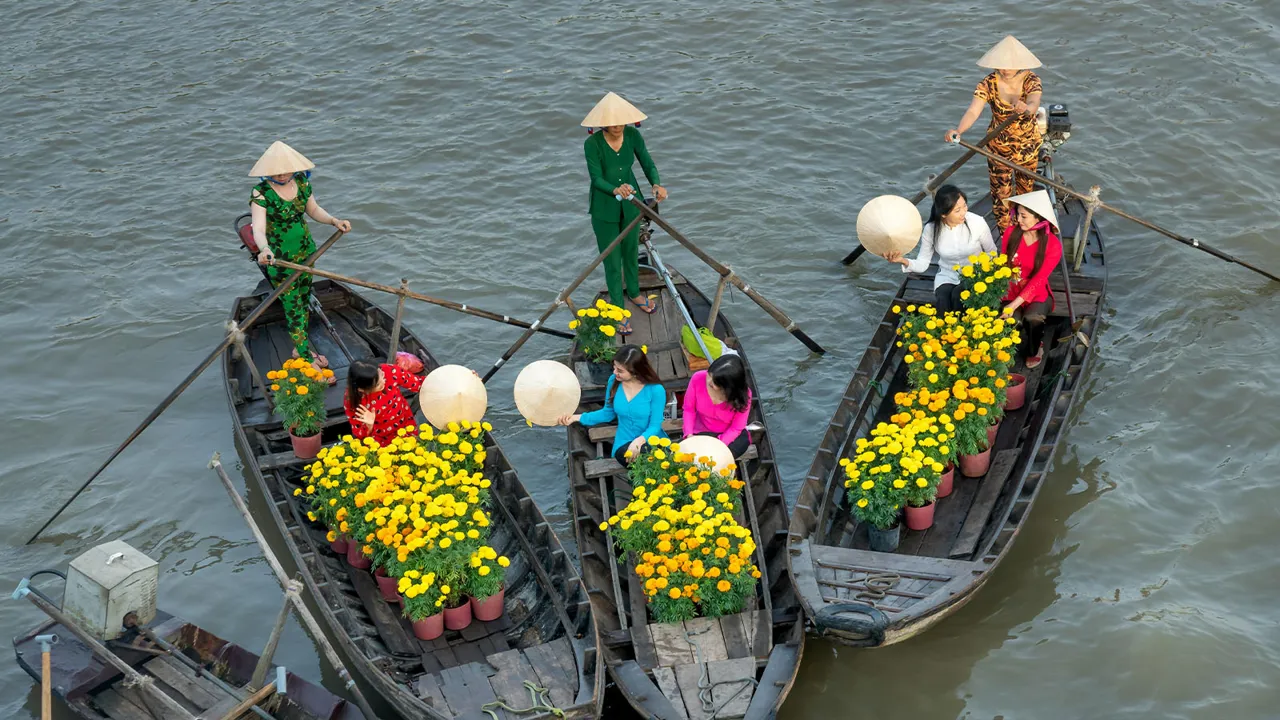
Vietnam Cambodia Itinerary 14 Days
Hanoi – Hoa Binh – Mai Chau – Ninh Binh – Halong bay – Hue - Danang – Hoian – Saigon – Ben Tre - Can Tho – Saigon - Siem Reap Angkor - Tonlé Sap - Siem Reap – Ta Prohm - Departure

Authentic Hoang Su Phi Trekking Tours
Hoang Su Phi trekking tours take you to stunning terraces, meet few tourists, connect with locals and enjoy authentic culture.

Honeymoon Tour Packages In Vietnam 12 Days
Saigon Arrival - City Tour – Mekong Delta – Danang – Hoian - by flight - Da Nang – Hanoi - by flight – Halong - overnight on junk – Departure
Are you interested in this tour?

Our testimonials
Whether it's a short or long tour, to discover must-see sites or to travel less-traveled paths, by car, junk, on foot, by bike or by motorbike... upon their return from their trip to Indochina, our clients tell us about their experiences. We thank them for entrusting us with the organization of their stay in Vietnam, Cambodia, Laos, Thailand and Myanmar!
Tailor-made trips to Vietnam
Are you a couple, a family, a group of friends? Are you planning a trip to Vietnam and/or Southeast Asia? Or maybe you want an individual, personalized trip, operated directly by a local agency? Perhaps you're thinking of a customized trip accompanied by a perfectly French-speaking guide and a private car with a professional driver... Are you the kind of traveler who likes to go where others don't? Our tailor-made tours adapt to your desires, your choices, your pace and your budget.... You decide, we create a trip that suits you!


Don't miss anything from Southeast Asia
The press talks about us




Comment
No comments yet. Be the first to leave a comment!