 Français
 Deutsch
 Italiano
 Português
 Español

The Architect Who Wrote a Chinese Character in Concrete: Independence Palace, Saigon
Seen from above, Independence Palace in Ho Chi Minh City forms the shape of a Chinese character meaning good fortune. It is one of the few government buildings in the world designed to be read as much as it is meant to be seen — and its story runs through colonial rule, a coup, and the end of a war.
Independence Palace: The Building Designed to Be Read, Not Just Seen

Most iconic government headquarters around the world project authority through sheer physical scale: towering neoclassical stone columns, expansive staircases, and imposing facades. Independence Palace Ho Chi Minh City takes an entirely different approach.
Viewed from street level in District 1, the building presents itself as a serene, restrained piece of 1960s mid-century modernism, defined by low horizontal lines, wide open corridors, and a distinctive grid of vertical stone screens. However, when viewed directly from above, its structural floor plan spells out a Chinese character representing good fortune (Cát - 吉). Other sections of the landmark, when read in elevation, form additional characters representing free speech, loyalty, civic virtue, and national sovereignty.
This subtle integration was not a decorative coincidence. It was the deliberate creation of a master Vietnamese architect who combined modern European structural engineering with traditional feng shui and Eastern cultural philosophy.
Whether you are a history enthusiast, an architecture admirer, or a first-time traveler mapping out your Saigon itinerary, understanding Independence Palace Ho Chi Minh City requires looking beyond its iconic front gates. This guide explores the story behind its two names, its intricate architectural symbolism, its secret underground command bunker, and updated visitor information.
What is Independence Palace, and why does it have two names?
Located at 135 Nam Ky Khoi Nghia Street in the central heart of District 1, Independence Palace Ho Chi Minh City is officially recognized as a Special National Historic Relic. Today, it operates as a preserved heritage site open to international visitors while continuing to serve as an official venue for state receptions.

International travelers often wonder why the landmark is referred to by two distinct titles: Independence Palace and Reunification Palace (or Reunification Hall). The dual naming reflects two major political eras in modern Vietnamese history:
- Independence Palace (Dinh Độc Lập): This was the official title during the era of the Republic of Vietnam, when the building served as the presidential residence and administrative seat. Today, architects and historians generally use "Independence Palace" when discussing the site’s architectural concept, design philosophy, and mid-century construction.
- Reunification Palace (Dinh Thống Nhất): Following the historic events of April 30, 1975, the complex was renamed Reunification Hall to mark the end of the conflict and the reunification of the nation. Most contemporary travel guides, maps, and tour itineraries use "Reunification Palace" to highlight its historical role in the national story.
Both names are used interchangeably by locals and tour guides across the city today.
The history: From colonial governor’s residence to modern civic landmark
The history of the site spans over a century of urban development in Saigon, pre-dating the current structure seen today.
|
Year |
Historical milestone |
|
1868 |
French colonial authorities lay the foundation for Norodom Palace. |
|
1955 |
Formally transferred to Prime Minister Ngo Dinh Diem and renamed Independence Palace. |
|
1962 |
Damaged in an air strike; architect Ngo Viet Thu is commissioned to design a new palace. |
|
1966 |
Construction of the new modernist landmark is completed. |
|
1975 |
Historic transition takes place on April 30; the site is renamed Reunification Hall. |
The era of Norodom Palace (1868–1962)
In 1868, French colonial authorities laid the cornerstone for a grand residence intended for the Governor-General of Cochinchina. Known as Norodom Palace, this classical European mansion served French administrators and briefly Japanese forces during World War II. Following the 1954 Geneva Accords and the withdrawal of French troops, the building was transferred to Prime Minister Ngo Dinh Diem in 1955, who officially renamed it Independence Palace Ho Chi Minh City.
On February 27, 1962, an air strike targeted the residence. One bomb detonated inside the main wing, causing severe structural damage that rendered the old French-era mansion unsafe for restoration. Rather than rebuilding a colonial replica, Diem ordered the complete demolition of the damaged palace and commissioned a brand-new building on the exact same grounds. The design contract was awarded to a brilliant young Vietnamese architect who had recently returned from advanced studies in Europe.
Ngo Viet Thu: The master architect building a cultural identity in concrete
The architect selected for the project was Ngo Viet Thu (1926–2000), arguably the most credentialed Vietnamese architect of his generation.
|
Profile aspect |
Details |
|
Architect name |
Ngo Viet Thu (1926–2000) |
|
Key qualifications |
Winner of Grand Prix de Rome (1955); Honorary Fellow of the AIA |
|
Notable landmark projects |
Independence Palace, Hue University Campus, Phu Cam Cathedral |
|
Design philosophy |
Merging modern European construction with East Asian cultural symbolism |
Born in central Vietnam, Ngo Viet Thu studied at the prestigious École des Beaux-Arts in Paris. In 1955, he became the first Asian architect to win the coveted Grand Prix de Rome, an honor that earned him years of advanced research at the Villa Medici in Rome. By 1962, he was also named an Honorary Fellow of the American Institute of Architects (AIA).
When commissioned to build Independence Palace Ho Chi Minh City, Thu was under forty years old. Rather than adopting plain Western modernism or repeating French Beaux-Arts principles, he set out to create a unique style: modern reinforced concrete construction carrying an unmistakably East Asian philosophical language. His work succeeded in giving the building a timeless aesthetic that transcends individual political eras.
A building designed to be read: Hidden Chinese characters in the architecture
The defining architectural feature of Independence Palace Ho Chi Minh City is its floor plan and elevation, which were mathematically mapped out to form meaningful Chinese characters. In East Asian traditions, calligraphy and architecture share a deep connection through geometry, proportion, and spiritual symbolism.
|
Chinese character |
Architectural element |
Philosophical & symbolic meaning |
|
CÁT (吉) |
Aerial floor plan structure |
Symbolizes good fortune and auspiciousness for the nation. |
|
KHẨU (口) |
Square layout of the upper floor |
Symbolizes freedom of speech, open dialogue, and education. |
|
TRUNG (中) |
Flagpole intersecting the upper floor |
Symbolizes loyalty and centrality in governance. |
|
TAM (三) |
Balconies and front eaves tiers |
Represents three civic virtues: humanity, wisdom, and courage. |
|
CHỦ (主) |
Roof turret placed over lower tiers |
Signifies national sovereignty and leadership. |
|
HƯNG (興) |
Front facade columns and frames |
Expresses a collective wish for eternal societal prosperity. |
1. The character Cát (吉) – Good fortune
When viewed directly from the air, the entire footprint of the main building forms the character Cát (吉), which translates to "auspiciousness" or "good fortune". This aerial layout was engineered to bring enduring peace and prosperity to the nation.
2. The character Khẩu (口) and Trung (中) – Speech and loyalty
The upper floor of the palace, historically named Tứ Phương Vô Sự Lầu (Pavilion of Peace), forms a hollow square representing the character Khẩu (口), symbolizing "speech" or "education". When the central flagpole passes vertically through the center of this square, it completes the character Trung (中), symbolizing "loyalty" and "centrality"—core values in traditional Confucian political thought.
3. The character Tam (三) and Chu (主) – Virtue and sovereignty
The front eaves and balcony tiers are arranged horizontally to form the character Tam (三), representing three essential civic virtues: humanity, wisdom, and courage. Adding the vertical roof turret above the lower tiers creates the character Chủ (主), signifying "sovereignty".
4. The character Hưng (興) – Prosperity
The front facade, with its wooden-accented columns and framed balconies, outlines the character Hưng (興), expressing a wish for eternal societal growth.
Architectural details: Stone bamboo louvres and climate engineering

Walking up the main driveway toward Independence Palace Ho Chi Minh City, visitors immediately notice the delicate white grid encircling the second floor.
This structural screen, known in architectural terms as a frangisole (sunbreak), was custom-molded from stone to resemble slender bamboo stalks. Ngo Viet Thu drew inspiration from the decorative carved wooden screens found inside the Imperial Citadel in Hue.
Beyond its visual elegance, the stone bamboo screen serves an ingenious climate-control function for tropical Saigon:
- It diffuses intense tropical sunlight, casting soft ambient shadows across the inner open hallways.
- It allows fresh cross-breezes to circulate naturally through the building corridors, reducing reliance on artificial cooling systems.
- Culturally, bamboo represents resilience, flexibility, and strength under pressure in Vietnamese heritage.
Exploring inside: Ceremonial rooms, living quarters, and the command bunker
The interior of Independence Palace Ho Chi Minh City covers roughly 4,500 square meters of built space with nearly 100 preserved rooms. The decor remains largely frozen in time, reflecting authentic mid-century interior design from the 1960s and 1970s.
- Main floor: Contains formal administrative halls, including the Cabinet Room, the State Banquet Hall, and the Ambassadors' Chamber featuring a monumental historic lacquer painting.
- Upper floors: Contain presidential private apartments, a private cinema, a playing card room, and a rooftop terrace with a helipad overlooking Le Duan Boulevard.
- Underground basement: Features a reinforced military command bunker, radio telecommunication rooms, and tactical map operation centers.
The Ambassadors' Chamber (Credentials Room)
Located on the main floor, this grand reception hall was where foreign ambassadors presented their credentials. The room's focal point is a monumental lacquer painting titled "Celebrations After the Victory Over the Mongols," created by master Vietnamese artists to highlight national heritage and resilience.

The Cabinet Room and official receptions
Furnished with rich hardwood tables, red carpeting, and hand-woven drapery, these rooms served as active administrative workspaces. The straight, clean lines of the furniture follow Ngo Viet Thu’s core design principle of "Chính đại quang minh," which translates to integrity, openness, and transparency.
Unexpected social spaces
Moving away from official administrative halls, the upper floors reveal a more intimate side of mid-century presidential life:
- Private cinema: A fully preserved 1960s screening room complete with original leather seats and projection equipment.
- Rooftop terrace & helipad: Designed for informal outdoor entertaining, featuring wide panoramic views overlooking Le Duan Boulevard. A painted target on the helipad marks the spot where an aircraft dropped ordnance during a 1975 strike.
- State Dining Room: Features a large original landscape painting titled "National Landscape," painted by Ngo Viet Thu himself.
The underground command bunker
For many international tourists, the most memorable portion of the tour lies beneath the building. Reached via narrow concrete staircases, the basement contains a heavy-duty reinforced underground bunker complex built to withstand heavy bombardment.
- Constructed with concrete and steel reinforced blast walls.
- Tactical Map Room featuring original military situation maps.
- Radio Communications Room equipped with vintage transmitters and rotary phones.
- Emergency Presidential Bedroom and administrative workstation.
- Independent power generator systems and air-filtration units.
Walking through these cool, quiet corridors provides a stark functional contrast to the ceremonial luxury of the grand ballrooms above.

The front lawn: Historic tanks and century-old trees
Stepping back out into the bright Saigon sunlight, visitors enter expansive manicured gardens.
The oval lawn and lotus pond
Directly facing the main entrance is a massive green oval lawn measuring 102 meters in diameter. A crescent-shaped lily pond filled with lotus flowers sits at the base of the main steps. Inspired by peaceful water features found in traditional Vietnamese rural temples, the pond softens the bold modern lines of the concrete structure.
Tanks 843 and 390
Parked peacefully under the shade of mature Dau and Sao trees on the left side of the lawn sit two armored military vehicles: Tank 843 and Tank 390.
- Tank 843: The legendary tracked vehicle that initiated entry through the side gate on April 30, 1975.
- Tank 390: The vehicle that entered through the central main gate, opening the way into the grounds.
- National status: Both vehicles have been officially designated as Vietnam National Treasures.
Today, replicas sit on the exact lawn where the historic entry occurred on the morning of April 30, 1975, offering visitors a tangible connection to the end of the conflict.
Practical visitor guide for Independence Palace
Planning a visit to Independence Palace Ho Chi Minh City is straightforward due to its central District 1 location.
|
Parameter |
Details |
|
Address |
135 Nam Ky Khoi Nghia Street, District 1, Ho Chi Minh City |
|
Opening hours |
08:00 – 16:30 Daily (Ticket counter closes around 15:45) |
|
Standard ticket price |
40,000 VND (Palace interior, bunker & grounds) |
|
Combo ticket price |
65,000 VND (Includes "From Norodom to Independence" Exhibition) |
|
Recommended duration |
1.5 – 2.0 Hours |
Location and transport options
The main entrance gate is located at 135 Nam Ky Khoi Nghia Street, Ben Thanh Ward, District 1.
- On foot: If you are staying in central District 1, the palace is a simple 5-to-10-minute walk from Notre-Dame Cathedral, the Central Post Office, or Ben Thanh Market.
- By ride-hailing app: Mobile apps like Grab and Be are safe, efficient, and inexpensive across the city. Simply set your destination to "Independence Palace" or "Dinh Độc Lập".
Opening hours and timings
The complex is open to the public every day of the week, including weekends and national holidays:
- Operating hours: 08:00 to 16:30 continuously.
- Ticket office: Closes approximately 30 to 45 minutes before final closing time.
- Travel tip: Arrive early between 08:00 and 09:30 to enjoy cooler morning temperatures and avoid peak tour bus arrivals.

Ticket prices (2026)
Ticket options are available at the main gate kiosks:
- Standard Palace Ticket: 40,000 VND (Includes access to the main palace floors, living quarters, rooftop, and underground bunker).
- Combo Ticket: 65,000 VND (Includes the standard palace tour PLUS access to the permanent historical exhibition "From Norodom to Independence 1868–1966" housed in the villa on the grounds).
Photography regulations & camera fees
To ensure a comfortable experience for all guests while protecting delicate interior relics, updated camera regulations apply:
- Smartphones & personal compact cameras: Casual souvenir photography using mobile phones or compact personal cameras is allowed free of charge throughout all public areas.
- Professional equipment / commercial photo crews:
- Professional camera ticket: A service fee of 500,000 VND per camera applies for guests bringing heavy DSLR setups or professional commercial equipment.
- Outdoor photo crew (e.g., Wedding/Artistic, max 8 persons): 1,500,000 VND per crew.
- Full location photo crew (Outdoor + Indoor, max 8 persons): 3,000,000 VND per crew (Note: External flash units, tripods, and continuous light stands are strictly prohibited inside historic rooms).

Visitor rules and etiquette
- Dress code: While there is no rigid dress code, respectful attire covering shoulders and knees is recommended out of courtesy for a national historic landmark.
- Preservation rules: Touching original furniture, leaning against wooden barriers, or bringing large luggage into narrow bunker corridors is strictly forbidden.
- Accessibility: Wheelchair ramps are available at the main ground entrance, though accessing certain sections of the underground bunker requires navigating narrow stairs.
Frequently asked questions (FAQs)
Who designed Independence Palace in Ho Chi Minh City?
The building was designed by celebrated Vietnamese architect Ngo Viet Thu, the first Asian recipient of the Grand Prix de Rome. Construction took place between 1962 and 1966.
Why is Independence Palace shaped like a Chinese character?
Architect Ngo Viet Thu engineered the aerial floor plan to form the character Cát (吉 - Good Fortune) to root a modern civic landmark in traditional East Asian cultural philosophy.
Is Independence Palace the same as Reunification Palace?
Yes. "Independence Palace" was the official name prior to 1975, while "Reunification Palace" (or Reunification Hall) was adopted after 1975 to celebrate national unity. Both names refer to the exact same complex in District 1.
What happened at Independence Palace on April 30, 1975?
Tanks entered the main grounds on the morning of April 30, 1975, marking the formal end of the conflict and initiating national reunification.
Is Independence Palace worth visiting?
Yes. For anyone interested in mid-century modern architecture, 20th-century history, or Eastern philosophy, it is one of the most complete preserved heritage sites in Southeast Asia.
How long does a visit to Independence Palace take?
Most visitors spend between 1.5 and 2 hours exploring the main floors, the rooftop, the underground command bunker, and the surrounding lawn gardens.
What is the connection between Independence Palace and Turtle Lake?
According to local tradition and newspaper records, 1960s geomancers viewed the palace and a nearby road junction in District 3 as connected points on a single terrain form ("Head and Tail of the Dragon"). Turtle Lake (Hồ Con Rùa) was constructed at the junction to bring balance to the urban landscape.

Conclusion: Architecture that outlasts politics
What makes Independence Palace Ho Chi Minh City worth far more than a quick photo stop is its deep symbolic design. From the street, it presents as a quiet, elegant piece of mid-century modernism. Understood in full—from its aerial calligraphy to its stone bamboo louvres and feng shui landscape orientation—it stands as an enduring masterpiece of cultural architecture.
That the structure survived a turbulent century and now serves as a protected national heritage site open to the world demonstrates how great architecture can outlast the political eras that commissioned it.
Plan your custom Saigon journey with Vietnam Original Travel
Exploring Ho Chi Minh City’s rich architectural heritage becomes far more meaningful with an expert local guide who can explain the nuances of Eastern philosophy, history, and urban design on-site.
At Vietnam Original Travel, we specialize in crafting tailor-made, private guided tours across Vietnam designed around your personal interests—whether that includes mid-century architecture, culinary discoveries, or historic landmarks.
Contact our local travel specialists today to customize your private Ho Chi Minh City day tour or extended Vietnam itinerary.
Giang is a Vietnam destination expert with over a decade of experience guiding travelers through the country’s most inspiring regions. Born and raised in the Red River Delta, Giang has an intimate understanding of local traditions, cuisine, and culture. Her articles reflect her mission: to help travelers discover the authentic Vietnam — beyond the postcards — through meaningful encounters and immersive journeys.
Send us your comments about : The Architect Who Wrote a Chinese Character in Concrete: Independence Palace, Saigon
Required fields*
You may also like
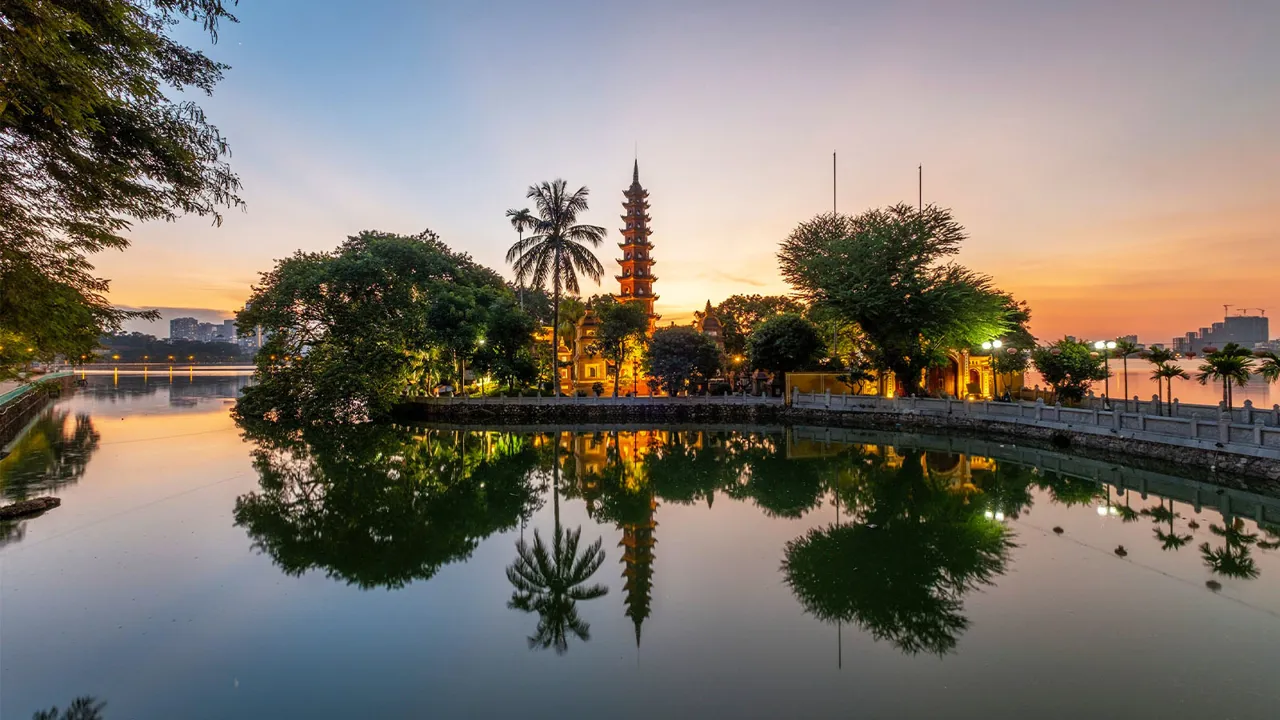
You may also like

How to experience authentic Vietnam beyond the tourist trail
Ha Long Bay and Hoi An's lantern-lit streets are only one layer of Vietnam. Here is how to find authentic Vietnam through local homestays, family meals, ethnic minority culture and slower, more respectful travel.

Ancestor Altar Etiquette in Vietnam: What Every Traveler Should Know
Nearly every Vietnamese home holds a small ancestor altar at its heart. Here's what to do, and what to avoid, if you're lucky enough to be invited inside one.

Vietnamese Pho: History, Types, How to Eat & Where to Try It
Discover the history of pho, Vietnam’s iconic noodle soup, from its Northern roots to Hanoi today. Explore regional flavors, ingredients, types, traditions, and where to try it.
Travel ideas
Need some inspiration? Discover some of the best tours in Vietnam, which are highly appreciated by our clients. An excellent starting point to help you choose the right trip to Vietnam, Laos, Cambodia, Burma or Thailand, whether you are traveling alone, as a couple, as a family or with friends.
And because this trip is yours, feel free to customize it as you wish!
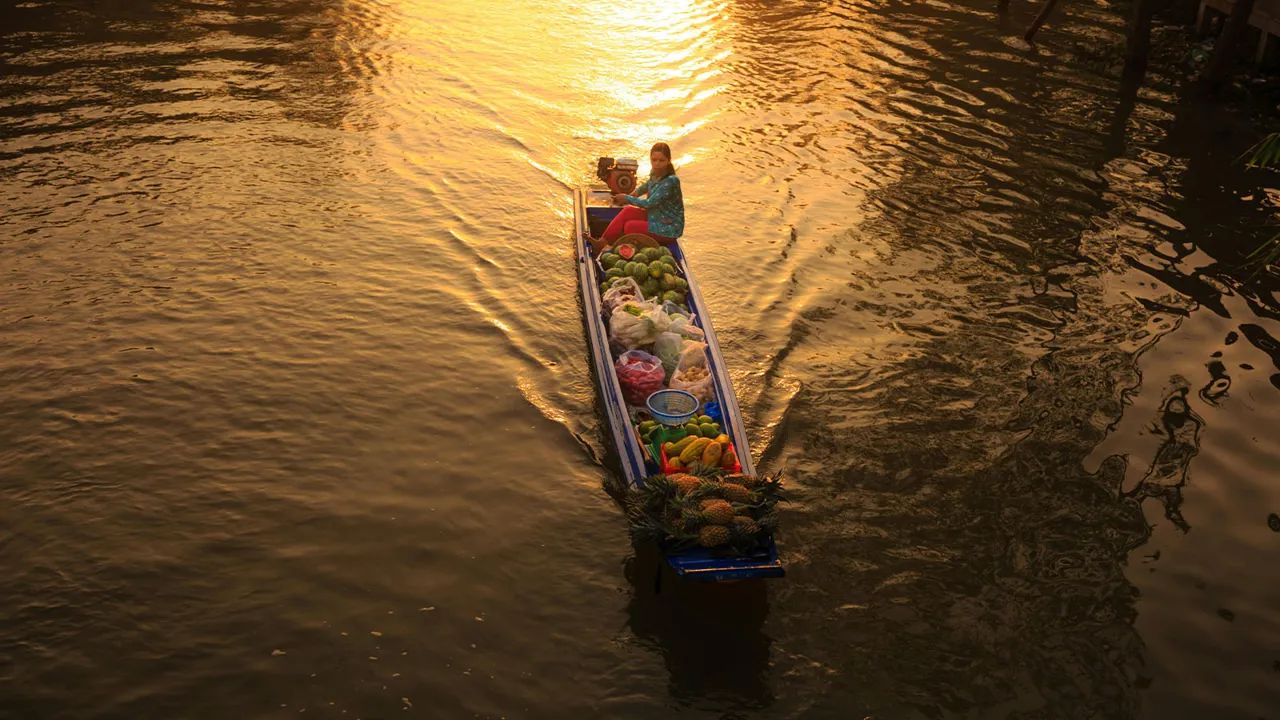
Vietnam Itinerary 2 Weeks
Hanoi - Ninh Binh - Lao Cai - Sapa - Muong Hum market - Ha Long Bay - Hue - Danang - Hoi An - Saigon - Mekong Delta - Cai Rang floating market - Departure

The Best of Ha Giang Trekking Tours
Discover Ha Giang on trekking tours where you live local life, enjoy breathtaking views and escape the crowded routes.

Vietnam and Laos 14 days
Saigon - My Tho - Da Nang- Hoian – Hue - Hanoi - Halong Bay - Vientiane Luang Prabang - Pak Ou – Khuang Si - Luang Prabang – Departure
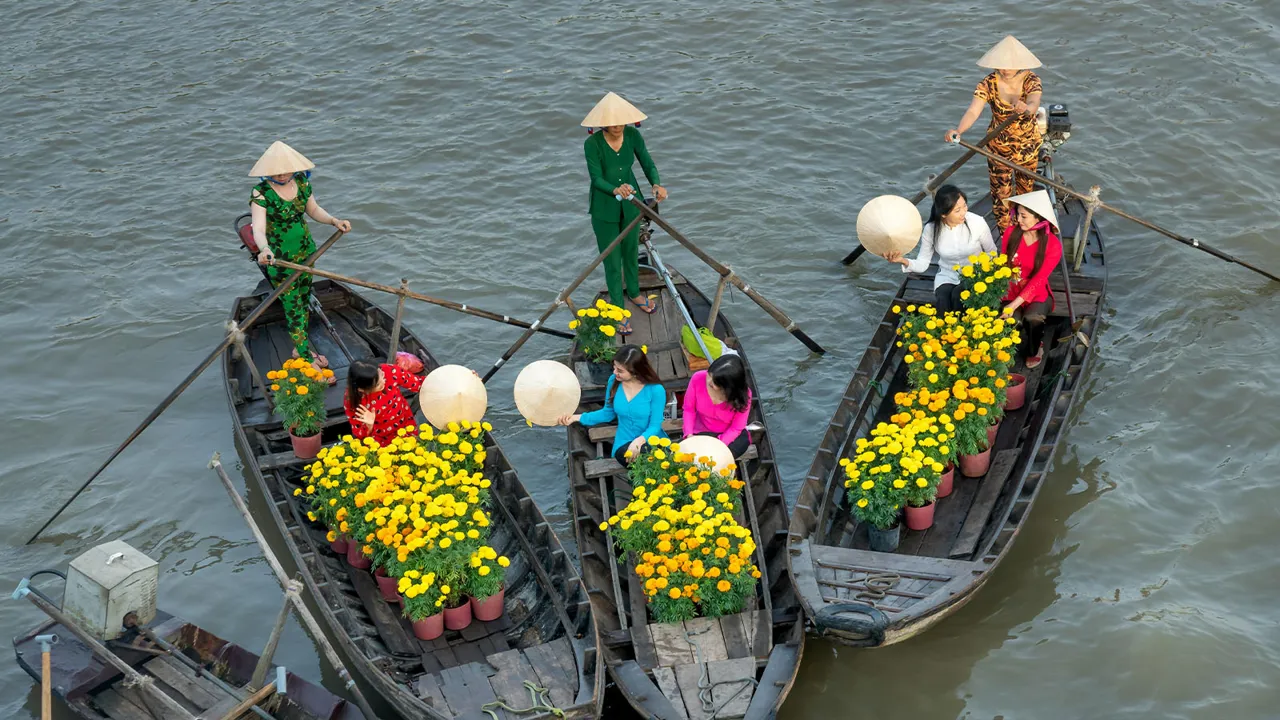
Vietnam Cambodia Itinerary 14 Days
Hanoi – Hoa Binh – Mai Chau – Ninh Binh – Halong bay – Hue - Danang – Hoian – Saigon – Ben Tre - Can Tho – Saigon - Siem Reap Angkor - Tonlé Sap - Siem Reap – Ta Prohm - Departure

Authentic Hoang Su Phi Trekking Tours
Hoang Su Phi trekking tours take you to stunning terraces, meet few tourists, connect with locals and enjoy authentic culture.

Honeymoon Tour Packages In Vietnam 12 Days
Saigon Arrival - City Tour – Mekong Delta – Danang – Hoian - by flight - Da Nang – Hanoi - by flight – Halong - overnight on junk – Departure
Are you interested in this tour?

Our testimonials
Whether it's a short or long tour, to discover must-see sites or to travel less-traveled paths, by car, junk, on foot, by bike or by motorbike... upon their return from their trip to Indochina, our clients tell us about their experiences. We thank them for entrusting us with the organization of their stay in Vietnam, Cambodia, Laos, Thailand and Myanmar!
Tailor-made trips to Vietnam
Are you a couple, a family, a group of friends? Are you planning a trip to Vietnam and/or Southeast Asia? Or maybe you want an individual, personalized trip, operated directly by a local agency? Perhaps you're thinking of a customized trip accompanied by a perfectly French-speaking guide and a private car with a professional driver... Are you the kind of traveler who likes to go where others don't? Our tailor-made tours adapt to your desires, your choices, your pace and your budget.... You decide, we create a trip that suits you!

Don't miss anything from Southeast Asia
The press talks about us



Comment
No comments yet. Be the first to leave a comment!