 Français
 Deutsch
 Italiano
 Português
 Español


Bat Trang Pottery Museum: A Complete Guide to Vietnam’s Living Ceramic Heritage
Just outside Hanoi, the Bat Trang Pottery Museum offers a hands-on journey into Vietnam’s ceramic heritage. Discover what to see, do, and plan for a perfect half-day trip.
Just a short journey from Hanoi’s bustling Old Quarter lies a place where time slows down, hands shape clay into art, and centuries of tradition continue to thrive. Welcome to Bat Trang Pottery Museum—more than just a cultural attraction, it’s a gateway into one of Vietnam’s oldest and most vibrant craft villages.
For many travelers, museums can feel passive—places where you observe history from a distance. Bat Trang offers something different. Here, history is not behind glass cases. It’s alive in the hands of artisans, in the rhythm of pottery wheels, and in the stories embedded in every ceramic piece.
Whether you’re interested in culture, art, or simply looking for a meaningful half-day trip from Hanoi, Bat Trang Pottery Museum offers an experience that is both authentic and deeply engaging.
The History Behind Bat Trang Pottery
Origins of Bat Trang Village
Bat Trang’s story dates back over 700 years, making it one of Vietnam’s most renowned traditional craft villages. Located along the Red River, the village developed as a hub for ceramic production thanks to its access to high-quality clay and convenient trade routes.
Historically, Bat Trang pottery was used in royal households, religious practices, and everyday life. From delicate bowls to intricate ceremonial items, each piece reflected both functionality and artistry.

From Tradition to a Living Craft Hub
What makes Bat Trang truly remarkable is not just its long history, but its rare ability to sustain that history in a meaningful way. While many traditional craft villages across Asia have gradually faded under the pressure of industrialization and mass production, Bat Trang has taken a different path—one of adaptation rather than compromise.
Over the centuries, the village has continuously evolved, integrating new techniques, designs, and market demands without losing the essence of its identity. Today, it is no longer just a place where ceramics are produced—it is a dynamic creative hub where generations of artisans coexist. Elder craftsmen still shape clay using methods passed down through families, while younger artists experiment with contemporary forms, colors, and artistic expression.
This coexistence creates a unique energy. Tradition is not frozen or displayed as something of the past; instead, it is actively practiced, reinterpreted, and carried forward. Workshops remain open, kilns are still in use, and the rhythm of daily life continues to revolve around the craft. In this way, Bat Trang stands as one of the few places in Vietnam where heritage is not preserved artificially for tourism, but lives on organically—shaped by real people, real work, and a continuous dialogue between past and present.
What to See Inside Bat Trang Pottery Museum
Traditional Ceramic Collections
Inside the museum, visitors are introduced to the rich legacy of Vietnamese ceramics through a carefully curated collection that spans centuries of craftsmanship. Rather than simply displaying objects, the museum presents a visual narrative of how pottery has evolved alongside Vietnamese society.
You’ll encounter a wide range of pieces—from everyday household items such as bowls, plates, and storage jars to more refined decorative works and intricate religious or ceremonial objects. Each item reflects not only technical skill, but also the cultural values, beliefs, and aesthetics of its time.
What makes this section particularly engaging is the sense of continuity. These are not distant relics from a forgotten past, but extensions of a living tradition that still exists just outside the museum walls.

Contemporary Ceramic Artworks
Moving beyond tradition, the museum shifts its focus toward the present and future of Vietnamese ceramics. This section highlights contemporary works that reinterpret classic materials through a modern artistic lens.
Here, you’ll find bold forms, unconventional shapes, and experimental glazing techniques that challenge traditional expectations of pottery. Some pieces blur the line between craft and fine art, inviting visitors to reconsider what ceramics can represent in today’s world.
The contrast between traditional and contemporary collections creates a dynamic experience. It becomes clear that Bat Trang is not a place preserved in time, but one that continues to evolve—where innovation grows naturally from a deep-rooted heritage.
The Underground Ceramic Market
One of the most underrated yet rewarding parts of the museum lies just beneath its main exhibition space. The underground ceramic market offers a completely different experience—less curated, more vibrant, and closely connected to everyday life in the village.
As you walk through this space, you’ll find a wide variety of ceramics on display, ranging from simple, functional pieces to more refined, artistic creations. Unlike typical souvenir shops, many of these items are sold directly by local artisans or workshops, giving you a more authentic connection to what you’re purchasing.
It’s also one of the best places in the Hanoi area to find high-quality, handcrafted ceramics at reasonable prices. Whether you’re looking for a meaningful souvenir or simply browsing, the market adds a practical, tangible dimension to your visit—allowing you to take a piece of Bat Trang’s craftsmanship home with you.
Architecture & Atmosphere: A Museum Like No Other
A Unique Spiral Design Inspired by Pottery
The first thing that captures your attention is the museum itself.
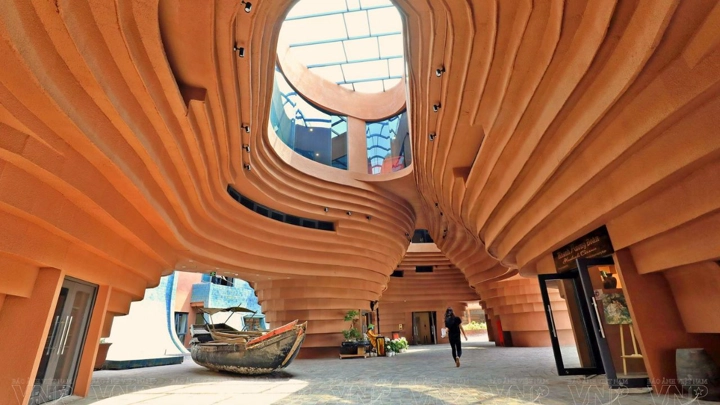
Designed as a series of giant spiraling forms, the building mirrors the motion of a pottery wheel in action—fluid, continuous, and intentional. This distinctive architecture has earned it the nickname “Whirling Terracotta Museum,”and for good reason.
Rather than moving through a traditional, linear layout, visitors are gently guided along curved pathways that unfold from one space to another. The experience feels almost symbolic—as if you’re moving through the very process of creation, from raw material to finished form.
It’s not just a building to look at. It’s part of the story.

Interactive Exhibitions
Inside, the experience becomes more hands-on and engaging.
Unlike conventional museums where observation is passive, Bat Trang invites you to interact, explore, and get closer to the craft itself. Depending on the exhibition, you may have the chance to:
- Touch selected materials and textures
- Observe shaping and glazing techniques up close
- Engage with displays in a more immersive, sensory way
This approach makes the museum accessible to everyone—not just art enthusiasts or experts, but also first-time visitors who may have little to no background in ceramics.
It turns learning into something intuitive rather than instructional.

A Living Museum Experience
What truly sets Bat Trang apart is what happens beyond the museum walls.
Step outside, and the experience doesn’t end—it expands. The surrounding village is filled with active workshops, where artisans are shaping clay, firing kilns, and continuing traditions that have existed for generations.
Here, the boundary between exhibition and real life fades away. You’re no longer just observing pottery as an art form—you’re witnessing it as a living, breathing part of daily life. This connection transforms the visit from something visual into something deeply experiential. And that’s what makes Bat Trang different: it’s not just a museum you visit—it’s a world you step into.
Activities & Experiences You Shouldn’t Miss
Try Pottery-Making Yourself
One of the most memorable parts of visiting Bat Trang is not what you see—but what you create.
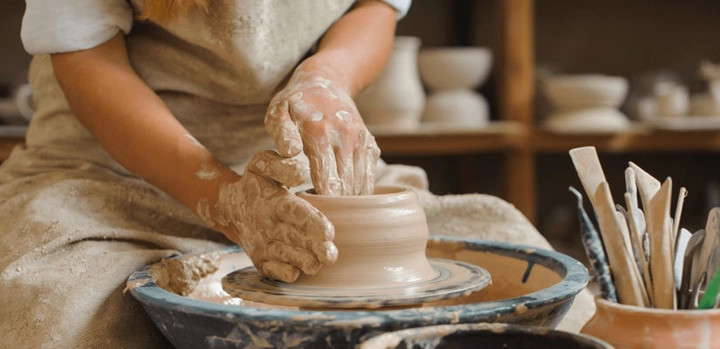
Sitting at a pottery wheel, with a local artisan guiding your hands, you’ll quickly discover that shaping clay is both intuitive and unexpectedly challenging. What looks effortless from a distance suddenly requires focus, patience, and a sense of touch.
There’s something deeply satisfying about this process. The spinning wheel, the texture of wet clay, the moment a form begins to take shape—it draws you into the craft in a way that observation never could.
It’s not about making something perfect. It’s about understanding the craft from the inside.
Workshops & Cultural Experiences
Beyond the pottery wheel, Bat Trang offers a range of hands-on activities that allow you to engage with the craft in different ways.
Depending on your time and interest, you can join:
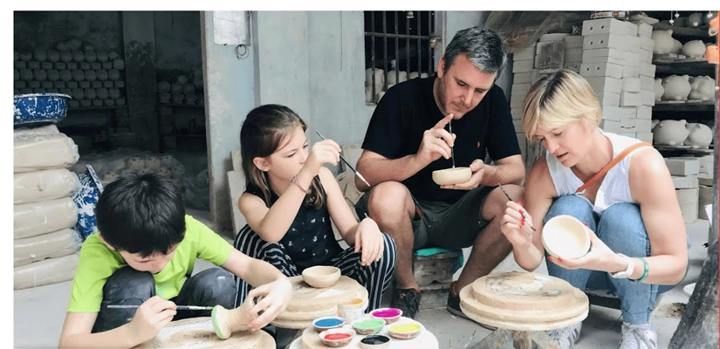
- Ceramic painting sessions on pre-made pieces
- Short craft workshops guided by local artisans
- Cultural tours that explain the history and symbolism behind the designs
These experiences transform your visit from passive sightseeing into active participation. Instead of simply learning about Bat Trang, you become part of it—even if just for a few hours.
A Community-Based Experience
Supporting Local Artisans
What makes Bat Trang especially meaningful is the direct connection between visitors and the local community.
Unlike large, commercialized attractions, most activities here are run by families and small workshops. The people guiding your experience are often the same ones who have spent years mastering the craft.
Every workshop you join, every piece you purchase, contributes directly to sustaining these livelihoods. It’s tourism in its most tangible form—where your presence creates real impact.

Preserving Craft Heritage
In a rapidly modernizing world, traditional crafts often struggle to survive.
Bat Trang offers a different narrative.
Here, tourism doesn’t replace tradition—it supports it. By creating demand for handmade ceramics and cultural experiences, visitors play a role in keeping these techniques alive. Skills that might otherwise fade are passed down, practiced daily, and adapted for new generations.
It’s a quiet but powerful form of preservation—one that happens not in theory, but in everyday life.
A Bridge Between Tradition and Modernity
What makes Bat Trang truly stand out is its ability to exist between two worlds without losing its identity.
On one side, there are centuries-old techniques—unchanged in their essence, rooted in experience and tradition. On the other, a younger generation of artists is experimenting with new forms, aesthetics, and ideas, pushing the boundaries of what Vietnamese ceramics can become.
This coexistence creates a unique creative energy. Nothing feels forced or artificial. Instead of choosing between past and present, Bat Trang allows both to exist side by side—each shaping the other in subtle ways. It is not a place that simply preserves history. It is a place where tradition continues to evolve, naturally and continuously.

Hands-On Experience: Make Your Own Pottery
Understanding the Craft
At its core, pottery begins with something remarkably simple: clay. Yet what transforms this raw material into a finished ceramic piece is a process that requires both time and precision.
From shaping on the wheel to drying and firing in high-temperature kilns, each stage demands a different kind of attention. Watching this transformation unfold offers more than just technical insight—it reveals the patience and discipline behind every object you see in the museum.
What may appear as a simple bowl or cup is, in reality, the result of a carefully layered process, where even the smallest detail can influence the final outcome. This awareness alone changes the way you perceive craftsmanship.
Learning Traditional Techniques
The most engaging way to understand this process, however, is to experience it yourself.
Under the guidance of local artisans, visitors are introduced to the fundamental techniques of shaping and decorating ceramics. With hands on the wheel and clay in motion, the learning becomes immediate and tactile.
It quickly becomes clear that pottery is not about control alone, but about balance—between pressure and movement, intention and adaptation. No two pieces turn out exactly the same, and that is precisely what gives them character.
Rather than aiming for perfection, the experience invites you to embrace the process itself. The slight asymmetries, the imperfect lines—these become part of the story you create.
Taking Your Creation Home
Once your piece is complete, the question naturally arises: what happens next?
Because ceramics require time to dry and be fired properly, not all items can be taken home immediately. Depending on the type of workshop, you may either return later to collect your piece or arrange for it to be shipped to your address.
Some visitors choose a more time-efficient option by decorating pre-fired ceramics, which can be taken home sooner. Either way, the result carries a different kind of value.
It is no longer just an object you purchased—it is something you have shaped, however briefly, with your own hands.
Why It Matters
In a world increasingly defined by speed and mass production, experiences like this offer a rare contrast.
Creating something by hand slows the pace. It requires attention, presence, and a willingness to engage with the material in front of you. In doing so, it creates a deeper connection—not only to the craft, but also to the place and the people behind it.
What you take away is more than a finished ceramic piece.
It is a moment of involvement, a better understanding of the craft, and a memory that feels distinctly personal—something no store-bought souvenir can fully replicate.
How to Get to Bat Trang Pottery Museum
Located just 10–15 kilometers from central Hanoi, Bat Trang Pottery Museum is one of the most accessible cultural day trips from the city. Depending on traffic, the journey typically takes around 30 to 40 minutes, making it an ideal half-day escape from the busy Old Quarter.
There are several ways to get there, each offering a slightly different experience.
Taxi or ride-hailing apps (such as Grab) are the most convenient options, especially for first-time visitors. They are affordable, easy to use, and allow you to travel directly without needing to navigate public transport.
Cycling, on the other hand, offers a more immersive journey. Riding along the Red River dike, you’ll pass through quieter neighborhoods and rural landscapes that feel far removed from Hanoi’s urban energy. It’s slower, but far more rewarding if you enjoy exploring at your own pace.
Guided tours are ideal if you prefer a structured experience. Many tours combine Bat Trang with other nearby attractions, adding context through local guides and saving you the effort of planning logistics.
Each option works well—the choice simply depends on how independently you prefer to travel and how much time you have.

Opening Hours
The museum is generally open daily from morning until late afternoon, making it flexible enough to fit into most travel itineraries.
That said, timing your visit can make a noticeable difference in your overall experience.
Visiting in the early morning offers a quieter, more relaxed atmosphere. The air is cooler, and you’ll have more space to explore exhibitions or join workshops without crowds.
Alternatively, the late afternoon brings softer natural light, which enhances both the architecture and surrounding village—ideal for photography and a more atmospheric visit.
Midday, while still manageable, tends to be warmer and busier, especially on weekends.
Entrance Fees & Costs
One of the advantages of visiting Bat Trang is its accessibility—not just in distance, but also in cost.
Entrance fees to the museum are generally low, making it suitable for all types of travelers, from budget to mid-range and beyond. While prices may vary slightly over time, they remain very reasonable compared to similar cultural attractions.
Additional expenses to consider include:
- Pottery workshops, where you can create your own ceramic piece
- Ceramic painting sessions on pre-made items
- Souvenirs or handcrafted ceramics, often sold directly by local artisans
Overall, the experience offers excellent value. For a relatively small cost, you gain not only access to exhibitions but also the opportunity to engage with a living craft tradition in a meaningful way.

Travel Tips for Visiting Bat Trang
A few simple preparations can make your visit smoother and more enjoyable.
Dress comfortably and casually. If you plan to join a pottery workshop, be prepared to get your hands (and possibly clothes) a little dirty.
Bring cash. While some places accept card payments, many small workshops and local vendors prefer cash, especially for smaller purchases.
Visit on weekdays if possible. Weekends can become noticeably more crowded, particularly with local visitors and tour groups.
Allow at least 2–3 hours. This gives you enough time to explore the museum, walk around the village, and participate in a hands-on activity without feeling rushed.
With the right timing and a bit of flexibility, Bat Trang can easily become one of the most memorable cultural experiences during your stay in Hanoi.
FAQs About Bat Trang Pottery Museum
Is Bat Trang Pottery Museum worth visiting?
Yes—especially if you’re looking for a cultural experience that goes beyond typical sightseeing. Unlike many museums where you simply observe, Bat Trang offers a more interactive and immersive approach. You don’t just learn about Vietnamese ceramics—you experience it firsthand, whether through workshops, conversations with artisans, or simply walking through a living craft village.
How long should I spend there?
Most visitors spend around 2 to 3 hours exploring the museum and surrounding village. However, if you plan to join a pottery-making workshop or take your time browsing the local ceramic market, it’s worth allowing at least half a day for a more relaxed and complete experience.
Is it suitable for children?
Absolutely. The hands-on nature of pottery-making makes it particularly engaging for children. Activities like shaping clay or painting ceramics are both fun and educational, making Bat Trang a great option for families traveling with kids.
Do I need to book in advance?
For general visits, booking in advance is not strictly necessary. However, during weekends, holidays, or peak tourist seasons, it is highly recommended—especially if you want to secure a spot in a pottery workshop or guided experience. Planning ahead helps avoid waiting times and ensures a smoother visit.
Can I take my pottery home?
In many cases, yes—but it depends on the type of workshop you choose. Some pieces require time to dry and be fired in a kiln, which means they may not be ready immediately. Many workshops offer shipping services, or you can opt to decorate pre-fired items that can be taken home on the same day.
Is Bat Trang easy to visit independently from Hanoi?
Yes, very much so. The village is located just outside Hanoi and can be reached بسهولة by taxi, ride-hailing apps, or even bicycle. Signage is relatively clear, and the area is tourist-friendly, making it easy to explore without a guide if you prefer independent travel.
What is the best time of day to visit?
Early morning and late afternoon are generally the best times. Mornings are quieter and cooler, while late afternoons offer softer light and a more relaxed atmosphere. Midday can be hotter and more crowded, particularly on weekends.
Can I buy authentic ceramics at the museum?
Yes, and this is one of the highlights of visiting Bat Trang. In addition to the museum shop, the underground ceramic market and nearby village stores offer a wide selection of handcrafted items. Buying directly from artisans not only ensures authenticity but also supports the local community.
Bat Trang Pottery Museum – A Cultural Experience Worth Taking
The Bat Trang Pottery Museum is not just a place to visit—it’s a place to truly experience. It invites you to slow down in a way that modern travel rarely allows, to work with your hands, and to connect with a craft that has quietly shaped Vietnamese culture for centuries.
What makes Bat Trang special is not only what you see, but what you feel while you are there. The rhythm of the pottery wheel, the texture of clay between your fingers, and the quiet focus of local artisans all create a sense of presence that is difficult to replicate elsewhere. It is an experience that moves beyond observation and becomes something personal—something you take part in, rather than simply pass through.
For travelers seeking something authentic, meaningful, and slightly different from the usual itinerary, Bat Trang offers a refreshing alternative. It is not about ticking off landmarks, but about engaging with a living tradition—one that continues to evolve while staying deeply rooted in its origins.
>>> Top 10 Must See Museums In Hanoi
>>> Best Villages Near Hanoi for a Perfect Day Trip

Thuy Nguyen is a passionate travel blogger and storyteller who has spent years exploring the hidden corners of Vietnam and Southeast Asia. With a love for authentic experiences, she writes about local life, culture, and off-the-beaten-path adventures. Through her words, Anh invites readers to travel deeper, connect with people, and find beauty in every journey — whether it’s a quiet sunrise in Hoi An or a mountain trail in Ha Giang.
Send us your comments about : Bat Trang Pottery Museum: A Complete Guide to Vietnam’s Living Ceramic Heritage
Required fields*
You may also like



You may also like

24 Hours in Saigon: A Journey Through the City’s Contrasts
Forget the standard tourist loops. To understand Saigon, you must embrace its paradoxes. Spend your 24 hours navigating the extremes—where the hum of ancient temples meets the buzz of rooftop bars.

Best Villages Near Hanoi for a Perfect Day Trip (Craft, Culture & Local Life)
Step beyond Hanoi’s busy streets and discover traditions still lived. These day trips to craft villages and local communities offer a deeper, more authentic cultural experience

Cam Thanh Coconut Village – The Ultimate Guide to Hoi An’s Basket Boat Experience
Discover Cam Thanh Coconut Village in Hoi An. Learn about basket boat rides, ticket prices, best time to visit, local culture, and insider tips for an authentic eco-adventure.
Travel ideas
Need some inspiration? Discover some of the best tours in Vietnam, which are highly appreciated by our clients. An excellent starting point to help you choose the right trip to Vietnam, Laos, Cambodia, Burma or Thailand, whether you are traveling alone, as a couple, as a family or with friends.
And because this trip is yours, feel free to customize it as you wish!

Vietnam Itinerary 2 Weeks
Hanoi - Ninh Binh - Lao Cai - Sapa - Muong Hum market - Ha Long Bay - Hue - Danang - Hoi An - Saigon - Mekong Delta - Cai Rang floating market - Departure

The Best of Ha Giang Trekking Tours
Discover Ha Giang on trekking tours where you live local life, enjoy breathtaking views and escape the crowded routes.

Vietnam and Laos 14 days
Saigon - My Tho - Da Nang- Hoian – Hue - Hanoi - Halong Bay - Vientiane Luang Prabang - Pak Ou – Khuang Si - Luang Prabang – Departure

Vietnam Cambodia Itinerary 14 Days
Hanoi – Hoa Binh – Mai Chau – Ninh Binh – Halong bay – Hue - Danang – Hoian – Saigon – Ben Tre - Can Tho – Saigon - Siem Reap Angkor - Tonlé Sap - Siem Reap – Ta Prohm - Departure

Authentic Hoang Su Phi Trekking Tours
Hoang Su Phi trekking tours take you to stunning terraces, meet few tourists, connect with locals and enjoy authentic culture.

Honeymoon Tour Packages In Vietnam 12 Days
Saigon Arrival - City Tour – Mekong Delta – Danang – Hoian - by flight - Da Nang – Hanoi - by flight – Halong - overnight on junk – Departure
Are you interested in this tour?


Our testimonials
Whether it's a short or long tour, to discover must-see sites or to travel less-traveled paths, by car, junk, on foot, by bike or by motorbike... upon their return from their trip to Indochina, our clients tell us about their experiences. We thank them for entrusting us with the organization of their stay in Vietnam, Cambodia, Laos, Thailand and Myanmar!
Tailor-made trips to Vietnam
Are you a couple, a family, a group of friends? Are you planning a trip to Vietnam and/or Southeast Asia? Or maybe you want an individual, personalized trip, operated directly by a local agency? Perhaps you're thinking of a customized trip accompanied by a perfectly French-speaking guide and a private car with a professional driver... Are you the kind of traveler who likes to go where others don't? Our tailor-made tours adapt to your desires, your choices, your pace and your budget.... You decide, we create a trip that suits you!





Don't miss anything from Southeast Asia
The press talks about us




Comment
No comments yet. Be the first to leave a comment!