 Français
 Deutsch
 Italiano
 Português
 Español


24 Hours in Saigon: A Journey Through the City’s Contrasts
Forget the standard tourist loops. To understand Saigon, you must embrace its paradoxes. Spend your 24 hours navigating the extremes—where the hum of ancient temples meets the buzz of rooftop bars.
If you ask ten travelers to describe Saigon (Ho Chi Minh City), you’ll likely get ten different answers. To some, it is a relentless sea of motorbikes; to others, a refined relic of French colonial elegance. Some see it as a playground for modern entrepreneurs, while many still find its soul in the steam rising from a street-side noodle bowl.
The truth is, Saigon is never flat. It is a city built on a series of breathtaking, sometimes jarring, paradoxes. It is where tradition and modernity don’t just coexist—they collide, creating an electric energy that you won’t find anywhere else in Southeast Asia. If you only have 24 hours to spare, don’t try to "do" the city. Instead, try to feel its heartbeat by navigating its extremes.
Welcome to a journey through the two worlds of Saigon.

A Suggested 24-Hour Saigon Itinerary
If you’re looking for a practical Ho Chi Minh City itinerary for 1 day, here’s how to structure your time:
Morning
- Local coffee (phin coffee experience)
- Colonial landmarks (Post Office, Cathedral)
Afternoon
- Pagoda visit + hidden alley exploration
- Café break in a modern creative space
Evening
- Street food dinner (cơm tấm / bánh mì)
- Sunset skyline views
Night
- Rooftop bar or Bùi Viện nightlife
- Optional river cruise for a slower ending
Now, let’s break that journey into the contrasts that define Saigon.
Extreme 1: The Plastic Stool vs. The Michelin Star
In most world capitals, there is a clear line between "high" and "low" cuisine. In Saigon, that line is blissfully blurred. To understand the city’s culinary soul, you must eat at both ends of the spectrum.
The Street Food Ritual: The Humbling Plastic Stool
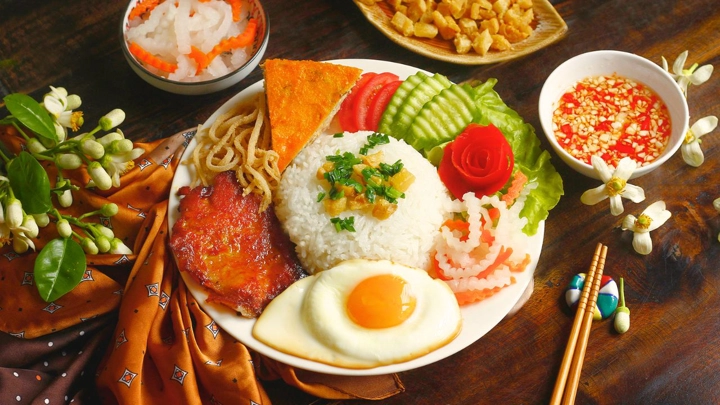
Your journey begins on a sidewalk. In District 1 or District 3, look for the billowing smoke of a charcoal grill. This is the realm of Cơm Tấm (Broken Rice)—the unofficial dish of the city.
Sitting on a tiny blue or red plastic stool, just inches above the pavement, you are part of a timeless Saigon ritual. The pork chop is marinated in lemongrass and honey, the fish sauce is sweet and pungent, and the "broken" rice grains absorb every drop of flavor. Here, luxury isn't about the furniture; it’s about the freshness of the ingredients and the mastery of the grill. You are surrounded by office workers, motorbike drivers, and students, all united by the simple pleasure of a 50,000 VND ($2) masterpiece.
The Fine Dining Revolution: Elevated Heritage at Anan Saigon
Fast forward to the evening. Head to the Chợ Cũ (Old Market) on Ton That Dam Street. Amidst the raw energy of a traditional wet market stands Anan Saigon, the city’s first Michelin-starred restaurant.
Chef Peter Cuong Franklin has taken the very street flavors you tasted earlier and elevated them into high art. His famous "Cầu Gai" (Sea Urchin) or the reinvented Banh Mi are tributes to the street vendors outside his door. At Anan, you aren't just eating a meal; you are witnessing the "New Vietnam." The service is world-class, the wine list is extensive, and the presentation is impeccable, yet the flavors remain fiercely, authentically Saigonese.

The Takeaway: A Cultural Equalizer
Why do both matter? Because in Saigon, food is the great equalizer. The billionaire and the street sweeper often crave the same bowl of noodles. Whether you are leaning over a plastic table or dining under crystal chandeliers, the obsession with flavor remains the same. One provides the roots; the other provides the vision.
Extreme 2: Ancient Pagodas vs. Neon Skyscrapers
Saigon’s skyline is changing at a dizzying pace, yet in the shadows of glass towers, the city’s spiritual heart continues to beat in silence.
The Spiritual Silence: Jade Emperor Pagoda
Step through the gates of the Jade Emperor Pagoda (Chùa Ngọc Hoàng) and the roar of the city vanishes. Built by the Chinese community at the turn of the 20th century, this temple is a labyrinth of dark wood, intricate carvings, and clouds of thick, sweet incense.
As you walk past statues of terrifying divinities and gentle bodhisattvas, you’ll see locals whispering prayers for luck, health, or fertility. There is a profound, heavy stillness here. Even the light seems to move slower, filtering through the smoke in dusty orange beams. It is a reminder that despite the rush toward the future, Saigon remains deeply anchored in its ancestral beliefs.

The Neon Future: Landmark 81 & Bitexco
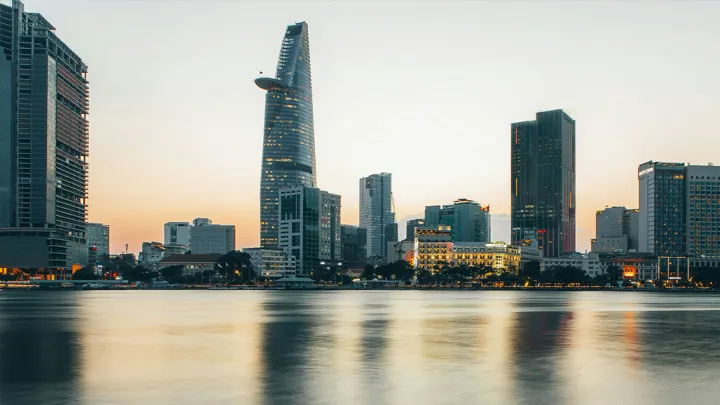
Now, look up. Looming over the city are the icons of 21st-century Vietnam. Landmark 81, currently the tallest building in Southeast Asia, stands like a glass bamboo bundle reaching for the clouds. Alternatively, the Bitexco Financial Tower, with its distinctive helipad, mimics a lotus bud.
Visit the Skydeck at sunset. As the neon lights of the city begin to flicker on, the scale of Saigon’s ambition becomes clear. From 80 stories up, the motorbikes look like glowing embers flowing through the veins of a giant. This is the "Neon Future"—a city that is hungry, ambitious, and unashamedly modern.

Extreme 3: Hidden Alleys vs. French Boulevards
Saigon’s geography is a mix of grand European planning and organic, chaotic Vietnamese growth. To see the city, you must walk both the wide avenues and the narrow veins.
The "Hẻm" Culture: The City Within a City
In Saigon, the "Hẻm" (alleyway) is where real life happens. These are narrow, labyrinthine passages where cars cannot enter. Here, the boundaries between private and public space disappear. You will walk past living rooms where families are watching TV, outdoor kitchens where grandma is simmering soup, and communal spaces where neighbors play chess.
The hẻms are the city’s social fabric. They are vibrant, noisy, and incredibly intimate. Navigating them is an adventure—you might find a hidden temple, a secret cafe, or simply a group of kids playing football. It is the raw, unedited version of Saigon.

Colonial Elegance: The French Legacy
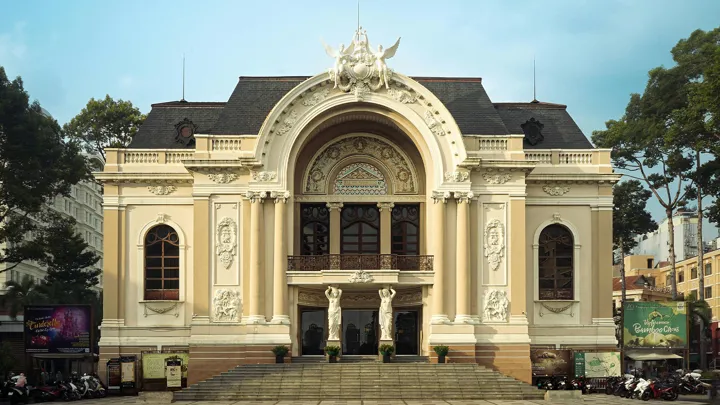
Exit the hẻm, and you might find yourself on Dong Khoi or Le Loi street. Suddenly, the sky opens up. You are standing amidst the "Paris of the Orient." The Saigon Opera House, the Central Post Office, and the Notre Dame Cathedral are monuments to a different era.
These boulevards are lined with luxury boutiques and five-star hotels like the Continental or the Majestic. The architecture is symmetrical, grand, and nostalgic. Walking these streets feels like a different century—a world of linen suits, afternoon tea, and colonial poise.
Extreme 4: Traditional "Phin" Coffee vs. Third-Wave Roasteries
Vietnam is the world's second-largest coffee producer, and in Saigon, caffeine is the fuel that keeps the motorbikes running.
The Old Way: Sidewalk Cà Phê Sữa Đá
The quintessential Saigon morning starts on the sidewalk. Cà Phê Sữa Đá (iced coffee with condensed milk) is brewed using a small metal filter called a "Phin." It drips slowly—a forced lesson in patience. The result is thick, dark, and sweet, served over plenty of ice to combat the morning heat.
This is "Coffee as a Utility." It’s meant to be enjoyed on a low stool, watching the morning rush hour. It is strong enough to jumpstart a heart and sweet enough to feel like a treat.

The New Wave: Third-Wave Roasteries
In recent years, a new generation of Saigonese has reclaimed the bean. Hidden in old apartments or sleek industrial spaces (like The Workshop or Bosgaurus Coffee), you’ll find "Third-Wave" roasteries.
Here, coffee is a science. You’ll find baristas discussing "tasting notes," "pour-overs," and "cold brews" using high-quality Arabica beans from the Central Highlands. The vibe is minimalist, the Wi-Fi is fast, and the patrons are the city’s creative class. This is "Coffee as an Art"—a reflection of a young, globalized population that is redefining what it means to be "Vietnamese."

Extreme 5: Chaotic Commute vs. Peaceful River Cruise
Transportation in Saigon is perhaps the greatest contrast of all—moving between the adrenaline of the asphalt and the serenity of the water.
Motorbike Madness: The Organized Chaos
To truly experience Saigon, you must enter the flow. Hiring a GrabBike or joining a Scooter Tour at rush hour is a sensory overload. You are surrounded by thousands of engines, the smell of exhaust, and a choreography of movement that seems impossible to an outsider.
There is a strange, visceral thrill in being part of the pack. You’ll see families of four on one bike, mountains of eggs being transported on the back, and commuters navigating the heat with practiced ease. It is chaotic, yes—nhưng nó là một sự hỗn loạn có tổ chức (organized chaos). It is the pulse of the city’s productivity.

River Serenity: The Saigon Water Bus
As the sun begins to set, head to the Bach Dang Wharf and board the Saigon Water Bus. For less than $1, you can leave the roar of the engines behind.
As the boat glides up the Saigon River toward Thanh Da or District 2, the city transforms. The breeze is cool, the water is calm, and the skyline begins to glow in the twilight. From the river, the chaos of the streets feels distant and poetic. Watching the sunset behind the Bitexco Tower while floating on the water is the perfect "reset" button for the soul. It is the moment where you realize that for all its noise, Saigon can be incredibly peaceful.

The Verdict: Why Opposites Attract in Saigon
By the end of your 24 hours, you will realize that Saigon’s "contrasts" are not contradictions—they are the city’s strength.
The Michelin star doesn't replace the plastic stool; it celebrates it. The skyscraper doesn't diminish the pagoda; it frames it. It is the tension between these two worlds that creates the "Saigon energy" that travelers find so addictive.
Saigon is a city that refuses to be just one thing. It is a place of endless layers, where every corner turned reveals a new paradox. It is a city that honors its past while sprinting toward its future, a place that is as humbling as it is ambitious.
So, when you visit, don't just stay in the air-conditioned malls or the quiet museums. Get lost in a hẻm, sit on a plastic stool, look up at the neon, and breathe in the incense. Only by embracing the extremes will you truly understand the magnificent, beautiful mess that is Saigon.
Practical Survival Guide for 24h in Saigon
Transport: Download Grab. It is the "Uber of Southeast Asia" and the safest way to get around (both car and bike).
Safety: Saigon is generally safe, but be "street smart." Keep your phone and bag away from the street side to avoid drive-by snatches.
Crossing the Road: This is a rite of passage. Walk slowly, at a steady pace. Do not stop. Do not run.The motorbikes will calculate your speed and flow around you like water around a stone.
Connectivity: Grab a 4G SIM card at the airport (Tan Son Nhat) for under $10. You’ll need it for Google Maps and Grab.
Cash is King: While hotels and big restaurants take cards, the "real" Saigon (hẻms, street food, small cafes) is a cash-based world. Always have some Vietnamese Dong (VND) in your pocket.

FAQs About Spending 24 Hours in Ho Chi Minh City
Is 24 hours enough to experience Ho Chi Minh City?
Twenty-four hours is not enough to see everything, but it is absolutely enough to feel the city. Rather than trying to cover a long checklist of attractions, a short stay works best when it focuses on contrasts—street food and fine dining, old temples and modern skyline, hidden alleys and grand boulevards. If planned well, one day can give you a surprisingly rich and memorable introduction to Saigon’s energy, culture, and rhythm of life.
What should I prioritize if I only have one day?
If time is limited, focus on three key elements: food, street life, and one or two cultural landmarks. Start your day with a local breakfast (such as cơm tấm or phở), explore a historic site like Jade Emperor Pagoda or Saigon Central Post Office, then spend time simply walking or riding through the city to observe daily life. In the evening, balance your experience with a rooftop bar or modern dining spot to see the city from a different perspective.
Is Ho Chi Minh City walkable?
Parts of the city—especially District 1—are relatively walkable, with many major attractions located close to each other. However, due to the heat, traffic, and distances between districts, relying entirely on walking can be tiring. Most visitors combine short walks with ride-hailing services like Grab. This allows you to explore comfortably while still experiencing the street-level atmosphere.
What is the best way to get around the city?
For convenience and safety, ride-hailing apps such as Grab (both car and motorbike options) are the most practical choice. Motorbike rides, in particular, offer a more immersive experience of the city’s traffic culture. Taxis are also widely available, while walking works well for short distances in central areas. For a different perspective, consider trying the Saigon Water Bus along the river.
Is Ho Chi Minh City safe for tourists?
Ho Chi Minh City is generally safe and welcoming for travelers. Violent crime is rare, but petty theft—such as bag or phone snatching—can occur, especially in busy areas. It’s advisable to keep your belongings secure, avoid using your phone near the street, and stay aware of your surroundings. With basic precautions, most visitors have a very smooth and enjoyable experience.
What is the best time of day to explore the city?
Early morning and late afternoon are the most comfortable times to explore. Mornings are cooler and offer a glimpse into local daily routines, while late afternoons and evenings bring the city to life with street food, lights, and social activity. Midday can be hot and humid, so it’s often best reserved for indoor attractions, cafés, or a short rest.
Can I explore Saigon independently, or should I join a tour?
Saigon is very accessible for independent travelers, especially with the help of navigation apps and ride-hailing services. However, joining a guided tour—particularly for food or cultural exploration—can provide deeper insight and access to places you might not find on your own. A mix of both approaches often works best: explore freely, but consider a short guided experience for added context.
What should I wear when exploring the city?
Lightweight, breathable clothing is recommended due to the tropical climate. Comfortable walking shoes are essential, especially if you plan to explore markets or alleyways. If you intend to visit temples such as Jade Emperor Pagoda, it’s respectful to wear modest clothing that covers shoulders and knees.
Is cash necessary, or can I use cards?
While credit cards are accepted in hotels, upscale restaurants, and shopping malls, much of Saigon still operates on cash—especially street food vendors, local cafés, and small shops. It’s best to carry Vietnamese Dong (VND) for everyday purchases to avoid inconvenience.
What kind of food should I try in one day?
With limited time, focus on iconic local dishes that represent the city’s culinary identity. These include cơm tấm (broken rice with grilled pork), bánh mì (Vietnamese sandwich), and cà phê sữa đá (iced coffee with condensed milk). If possible, balance your experience by trying both street food and a modern Vietnamese restaurant to understand how traditional flavors are being reinterpreted today.
Sai Gon in 24 Hours – Why Opposites Define Saigon
By the end of your 24 hours in Ho Chi Minh City, one thing becomes clear: the contrasts are not contradictions—they are the essence of the city itself.
The street stall and the Michelin-starred restaurant do not compete; they complete each other. The quiet spirituality of a pagoda exists comfortably alongside the ambition of glass skyscrapers. The hidden alleyways and grand boulevards are not separate worlds, but interconnected layers of the same urban story.
Saigon does not ask to be fully understood in a day. Instead, it invites you to experience its rhythm, to embrace its unpredictability, and to appreciate the harmony within its contrasts. And often, that first 24 hours is enough to leave a lasting impression—one that stays with you long after you’ve left the city behind.
>>> Com Tam (Vietnamese Broken Rice): The Best Streetfood In Saigon
>>> Hanoi or Ho Chi Minh City: Which City To Choose To Discover Vietnam?

Thuy Nguyen is a passionate travel blogger and storyteller who has spent years exploring the hidden corners of Vietnam and Southeast Asia. With a love for authentic experiences, she writes about local life, culture, and off-the-beaten-path adventures. Through her words, Anh invites readers to travel deeper, connect with people, and find beauty in every journey — whether it’s a quiet sunrise in Hoi An or a mountain trail in Ha Giang.
Send us your comments about : 24 Hours in Saigon: A Journey Through the City’s Contrasts
Required fields*
You may also like

You may also like
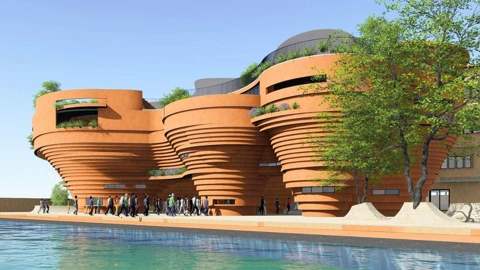
Bat Trang Pottery Museum: A Complete Guide to Vietnam’s Living Ceramic Heritage
Just outside Hanoi, the Bat Trang Pottery Museum offers a hands-on journey into Vietnam’s ceramic heritage. Discover what to see, do, and plan for a perfect half-day trip.

Best Villages Near Hanoi for a Perfect Day Trip (Craft, Culture & Local Life)
Step beyond Hanoi’s busy streets and discover traditions still lived. These day trips to craft villages and local communities offer a deeper, more authentic cultural experience

Cam Thanh Coconut Village – The Ultimate Guide to Hoi An’s Basket Boat Experience
Discover Cam Thanh Coconut Village in Hoi An. Learn about basket boat rides, ticket prices, best time to visit, local culture, and insider tips for an authentic eco-adventure.
Travel ideas
Need some inspiration? Discover some of the best tours in Vietnam, which are highly appreciated by our clients. An excellent starting point to help you choose the right trip to Vietnam, Laos, Cambodia, Burma or Thailand, whether you are traveling alone, as a couple, as a family or with friends.
And because this trip is yours, feel free to customize it as you wish!
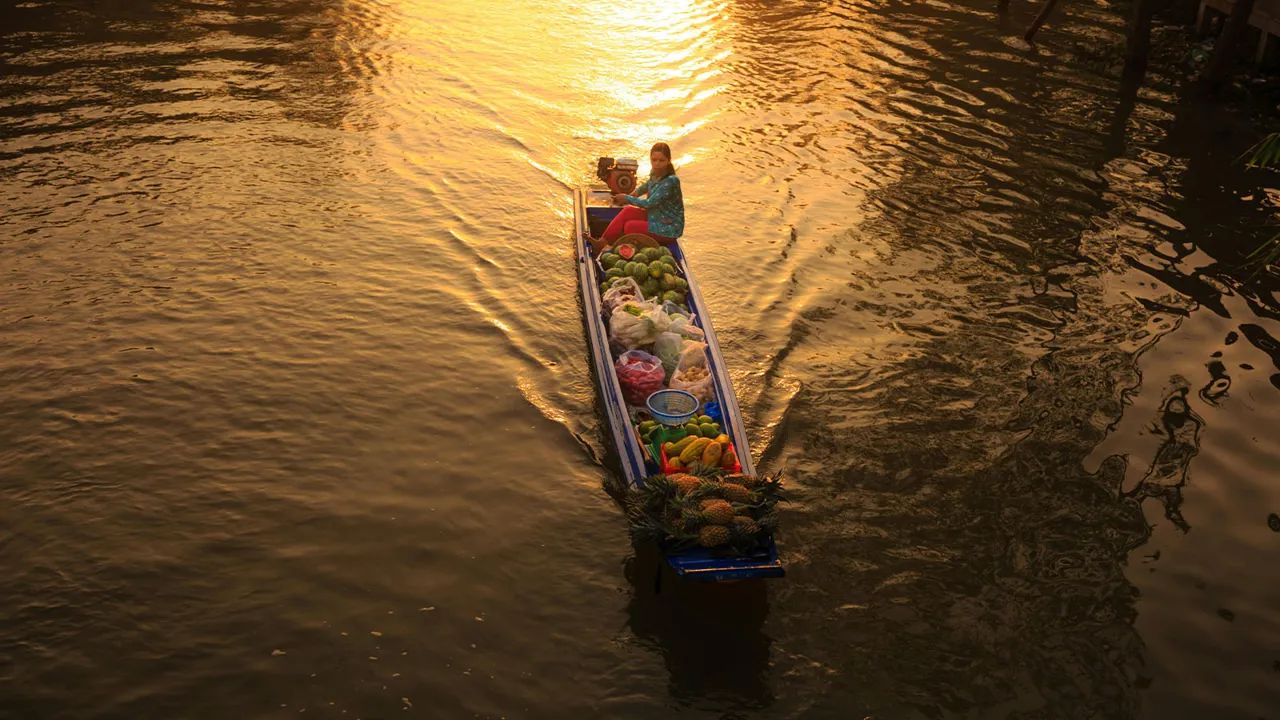
Vietnam Itinerary 2 Weeks
Hanoi - Ninh Binh - Lao Cai - Sapa - Muong Hum market - Ha Long Bay - Hue - Danang - Hoi An - Saigon - Mekong Delta - Cai Rang floating market - Departure

The Best of Ha Giang Trekking Tours
Discover Ha Giang on trekking tours where you live local life, enjoy breathtaking views and escape the crowded routes.

Vietnam and Laos 14 days
Saigon - My Tho - Da Nang- Hoian – Hue - Hanoi - Halong Bay - Vientiane Luang Prabang - Pak Ou – Khuang Si - Luang Prabang – Departure
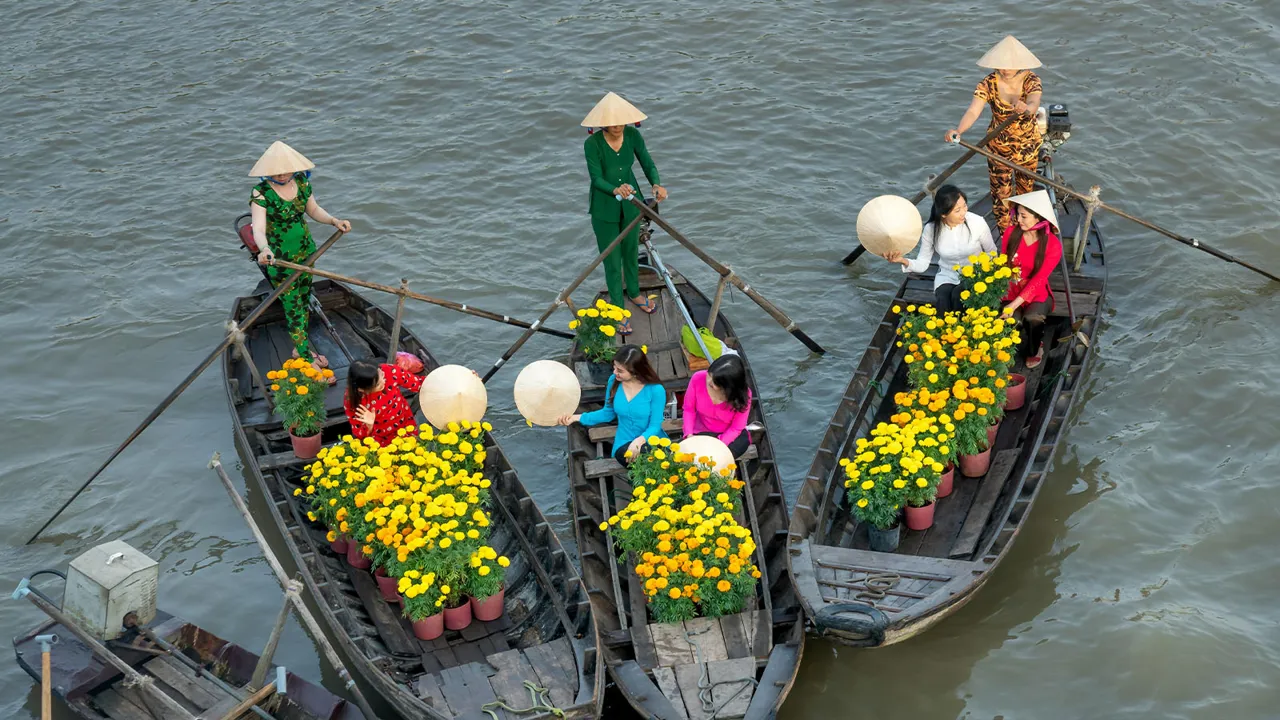
Vietnam Cambodia Itinerary 14 Days
Hanoi – Hoa Binh – Mai Chau – Ninh Binh – Halong bay – Hue - Danang – Hoian – Saigon – Ben Tre - Can Tho – Saigon - Siem Reap Angkor - Tonlé Sap - Siem Reap – Ta Prohm - Departure

Authentic Hoang Su Phi Trekking Tours
Hoang Su Phi trekking tours take you to stunning terraces, meet few tourists, connect with locals and enjoy authentic culture.

Honeymoon Tour Packages In Vietnam 12 Days
Saigon Arrival - City Tour – Mekong Delta – Danang – Hoian - by flight - Da Nang – Hanoi - by flight – Halong - overnight on junk – Departure
Are you interested in this tour?


Our testimonials
Whether it's a short or long tour, to discover must-see sites or to travel less-traveled paths, by car, junk, on foot, by bike or by motorbike... upon their return from their trip to Indochina, our clients tell us about their experiences. We thank them for entrusting us with the organization of their stay in Vietnam, Cambodia, Laos, Thailand and Myanmar!
Tailor-made trips to Vietnam
Are you a couple, a family, a group of friends? Are you planning a trip to Vietnam and/or Southeast Asia? Or maybe you want an individual, personalized trip, operated directly by a local agency? Perhaps you're thinking of a customized trip accompanied by a perfectly French-speaking guide and a private car with a professional driver... Are you the kind of traveler who likes to go where others don't? Our tailor-made tours adapt to your desires, your choices, your pace and your budget.... You decide, we create a trip that suits you!



Don't miss anything from Southeast Asia
The press talks about us




Comment
No comments yet. Be the first to leave a comment!