 Français
 Deutsch
 Italiano
 Português
 Español

Rice Cultivation in Vietnam: 9 Stages of the Traditional Rice Farming Cycle
Discover the 9 stages of rice cultivation in Vietnam, from preparing the fields and transplanting seedlings to harvesting golden rice. Explore traditional farming techniques, seasonal landscapes, and the cultural importance of rice in Vietnamese life.
Rice cultivation in Vietnam is much more than an agricultural activity. It is a centuries-old tradition that shapes the country’s landscapes, seasonal rhythms, culinary culture, and everyday life. From the emerald-green rice terraces of the northern mountains to the vast agricultural plains of the Mekong Delta, rice fields are among the most recognizable features of the Vietnamese countryside.
For generations, Vietnamese farmers have developed a deep understanding of the land, water, weather, and natural growing cycles. Their knowledge has been passed down through families, allowing rice cultivation to remain an essential part of Vietnam’s cultural identity.
Behind every bowl of steamed rice lies a long process involving soil preparation, seed selection, planting, irrigation, harvesting, and processing. Although modern machinery has transformed agricultural practices in many regions, traditional techniques and communal farming activities can still be observed in rural Vietnam.
Understanding the different stages of rice cultivation offers travelers a fascinating opportunity to discover the country’s agricultural heritage and connect with the landscapes beyond its bustling cities.
Let’s explore the nine main stages of rice cultivation in Vietnam, from preparing the fields to enjoying the final harvest.

1. Preparing the Rice Fields: Creating the Right Conditions for Growth
The first stage of rice cultivation in Vietnam begins with preparing the fields. Before rice seeds can be planted, farmers must ensure that the soil is suitable for growing healthy crops.
This process usually takes place several weeks before planting, depending on the local climate, rice variety, and agricultural calendar.
Vietnamese rice fields, known as ruộng lúa, are carefully prepared to create a relatively flat surface. Level fields allow water to spread evenly, helping farmers maintain the moisture required for rice growth.
Traditionally, farmers used wooden plows pulled by water buffaloes to loosen the soil. The buffalo remains an important symbol of rural Vietnamese life, particularly in the northern countryside.
Today, tractors and mechanical plows are increasingly common, especially in large agricultural areas such as the Mekong Delta.
After plowing, farmers break up the soil, remove weeds, and smooth the surface. The fields are then flooded or irrigated to create suitable conditions for planting.
Water management is particularly important. Farmers rely on rivers, canals, rainfall, and irrigation systems to supply their fields. Small embankments and channels help control water levels and prevent excessive flooding.
In mountainous regions, the preparation process can be especially impressive. Rice terraces are carefully maintained along hillsides, allowing farmers to cultivate rice in areas where flat agricultural land is limited.
For travelers, this stage offers an interesting glimpse into the relationship between Vietnamese farmers and their natural environment.

2. Seed Selection and Nursery Preparation: Giving Rice a Strong Start
Once the fields are ready, farmers prepare the rice seeds.
In traditional rice farming, seeds are often germinated separately before being transferred to the main fields. This allows farmers to select healthy seedlings and encourage more uniform growth.
The process begins by choosing suitable rice varieties according to the local climate, soil conditions, and expected harvest period.
Some varieties are selected for their fragrance, texture, or suitability for traditional dishes. Others are chosen because they grow well in particular regions or withstand local environmental conditions.
After selection, rice seeds are soaked in water, usually for approximately 24 to 48 hours, depending on the variety and farming method.
The soaked seeds are then allowed to germinate in a moist environment.
Once the first shoots appear, the seeds are spread across nursery beds, where they develop into young seedlings.
These nursery areas are generally located near the main rice fields, making it easier for farmers to transfer the seedlings when they are ready.
The young plants usually remain in the nursery for around two to four weeks, although the exact duration varies according to the variety and agricultural practices.
During this period, farmers carefully monitor their growth, protect them from pests, and ensure that they receive sufficient water.
The nursery stage is essential because healthy seedlings have a better chance of developing into strong rice plants after transplantation.

3. Transplanting Rice Seedlings: A Traditional Agricultural Practice
Transplanting is one of the most recognizable stages of traditional rice cultivation in Vietnam.
After the seedlings have grown sufficiently, farmers carefully remove them from the nursery and transfer them to the prepared rice fields.
The young plants are planted individually in flooded soil, usually in straight rows with regular spacing.
This arrangement allows rice plants to receive sufficient sunlight, nutrients, and space for their roots to develop.
In many rural communities, transplanting has traditionally been a collective activity.
Families and neighbors often work together, helping one another complete the planting process within the appropriate agricultural period.
The work requires patience, coordination, and considerable physical effort.
Farmers usually stand barefoot in muddy water, bending forward to plant the seedlings by hand.
Although mechanical transplanting machines are increasingly used in some agricultural areas, manual transplantation remains an important part of traditional rice farming.
For visitors exploring the Vietnamese countryside, this activity can be particularly fascinating.
In places such as Ninh Binh and the northern mountainous regions, travelers may encounter farmers working in flooded fields surrounded by limestone mountains, villages, and green hills.
During the planting season, these landscapes reveal a quieter side of Vietnam, where agricultural activities continue to follow the rhythm of nature.
However, planting dates vary significantly between regions. The timing depends on rainfall, temperature, irrigation availability, and local farming calendars.

4. Caring for the Rice Fields: Water, Nutrients, and Protection
After transplantation, rice plants begin their main growth period.
This stage lasts several weeks or months, depending on the rice variety and environmental conditions.
Farmers must regularly monitor the fields to ensure that the plants receive the water, nutrients, and protection they need.
Water Management
Water is one of the most important elements in rice cultivation.
Traditional wet rice farming requires careful irrigation throughout different stages of plant development.
Farmers regulate water levels through irrigation channels, small embankments, pumps, and drainage systems.
The amount of water required changes throughout the growing cycle.
Young seedlings need suitable moisture conditions, while excessive flooding can damage plants or interfere with their development.
As the rice matures, farmers gradually adjust irrigation according to the crop’s needs.
In some regions, water is temporarily drained from the fields before harvesting.
This helps the soil become firmer and makes harvesting easier.
Weed Control
Weeds compete with rice plants for sunlight, nutrients, and water.
If left uncontrolled, they can significantly affect crop development.
Traditionally, Vietnamese farmers removed weeds by hand or used simple agricultural tools.
Today, mechanical equipment and other weed-control methods are increasingly used in larger farming areas.
However, traditional manual techniques can still be observed in smaller fields and mountainous regions.

Fertilization
Rice plants require nutrients to grow properly.
Farmers may use compost, animal manure, plant residues, or commercial fertilizers to improve soil fertility.
The choice depends on local agricultural practices, available resources, and production objectives.
In some areas, farmers incorporate rice straw and other organic materials into the soil after harvesting.
These practices help maintain soil quality and support future crops.
Pest and Disease Management
Rice fields can be affected by insects, fungal diseases, and other agricultural problems.
Farmers regularly inspect their crops to identify potential threats.
Depending on local conditions, they may use agricultural treatments, biological control methods, or other pest-management techniques.
Some traditional farming systems also integrate fish or ducks into rice fields.
These animals can contribute to agricultural productivity while creating additional sources of food or income.
Throughout this stage, the landscape gradually changes.
Young rice plants become taller, greener, and denser, transforming the fields into a continuous carpet of vegetation.
For travelers, this is one of the most beautiful moments to observe the Vietnamese countryside.
5. Flowering and Grain Formation: Watching the Rice Mature
As the rice plants continue to grow, they eventually reach the flowering stage.
Small flowers develop within the rice panicles, marking the beginning of grain formation.
Although rice flowers are relatively inconspicuous, this stage is essential for the development of the future harvest.
Weather conditions become particularly important during flowering.
Strong winds, heavy rainfall, extreme temperatures, or water shortages can affect grain formation and reduce agricultural productivity.
Farmers therefore continue monitoring their fields carefully.
After flowering, the grains gradually develop and become fuller.
At first, the rice remains green.
As the plants mature, the color slowly changes from bright green to pale yellow and eventually golden.
This transformation is one of the most spectacular moments in the rice-growing cycle.
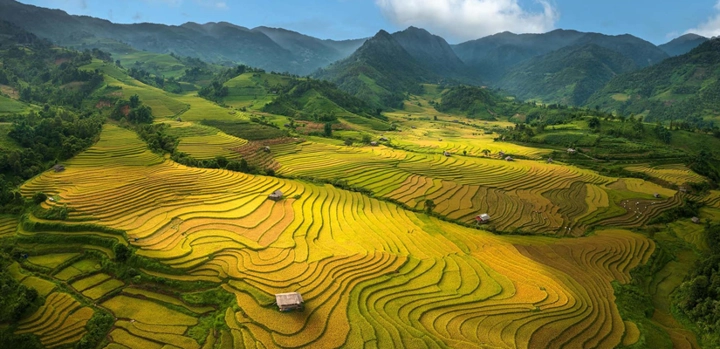
In northern Vietnam, the golden rice terraces of Mu Cang Chai and other mountainous areas attract travelers seeking beautiful landscapes and opportunities for photography.
The terraced fields follow the contours of the mountains, creating impressive patterns that change throughout the agricultural season.
In the Red River Delta and Mekong Delta, the scenery is different but equally fascinating.
Large areas of rice fields stretch across relatively flat landscapes, surrounded by villages, canals, and agricultural communities.
The exact timing of flowering and maturation depends on the variety, planting date, and local climate.
Farmers also gradually adjust irrigation as the grains approach maturity.
In some communities, agricultural traditions include prayers or offerings for favorable weather and a successful harvest.
These practices reflect the longstanding connection between rice cultivation, spirituality, and rural life in Vietnam.

6. Harvesting Rice: Bringing Months of Work to an End
Harvesting is one of the most important stages of rice cultivation in Vietnam.
After months of preparation and care, the rice grains become mature and ready to be collected.
Farmers determine the appropriate harvesting time by observing the color of the grains, the condition of the plants, and the maturity of the crop.
The rice usually turns golden yellow, while the grains become firm and fully developed.
Traditionally, Vietnamese farmers harvested rice using small sickles.
They cut the stalks by hand, gathered them into bundles, and transported them to areas where the grains could be separated from the stems.
This process required considerable labor, especially when large fields had to be harvested within a limited period.
Today, combine harvesters are widely used in many agricultural regions.
These machines can cut the rice, separate the grains, and reduce the time required for harvesting.
Mechanization is particularly common in the Mekong Delta, one of Vietnam’s most important rice-producing regions.
However, manual harvesting remains visible in smaller fields and mountainous areas where the terrain makes machinery difficult to use.
For travelers, the harvest season offers an opportunity to witness the countryside at its most active.
Farmers work together in the fields, transporting rice, gathering straw, and preparing the grain for drying.
The golden landscape, combined with the movement of people and agricultural equipment, creates a lively atmosphere.
In some villages, the harvest also brings a sense of celebration and relief after months of hard work.
Although modern agricultural practices have changed many aspects of harvesting, the importance of this moment remains deeply rooted in Vietnamese rural culture.

7. Drying, Threshing, and Processing: From Paddy Rice to White Rice
After harvesting, rice must undergo several additional processes before it becomes suitable for consumption.
The first important step is threshing.
Threshing separates the rice grains from the harvested stalks.
Traditionally, farmers performed this task by beating the rice bundles against a hard surface or using simple manual equipment.
Today, mechanical threshers and combine harvesters are commonly used to separate the grains more efficiently.
The harvested grain is known as paddy rice, or unhusked rice.
It still contains its outer protective husk and cannot be prepared in the same way as ordinary white rice.
Drying the Rice
Freshly harvested rice contains moisture that must be reduced before storage.
Traditionally, farmers spread the grains across large outdoor surfaces and allowed them to dry under the sun.
In rural Vietnam, travelers may still see rice spread along village roads, courtyards, or open drying areas.
This practice creates a distinctive countryside scene, particularly during the harvest season.
However, drying directly on roads can create safety concerns, and modern agricultural facilities increasingly use dedicated drying areas or mechanical dryers.
Proper drying helps prevent spoilage and improves storage quality.
Milling and Polishing
Once the rice has dried sufficiently, it is processed to remove the husk.
The resulting brown rice can then be polished to produce white rice.
Depending on the desired product, the processing may remove additional layers of the grain.
Modern rice mills handle these operations using specialized equipment.
In some rural communities, traditional tools are still used for small-scale processing.
After milling, rice can be stored for household consumption, sold to local markets, or transported to other regions.
For Vietnamese families, rice remains an essential everyday food.
It is served with vegetables, fish, meat, soups, and countless traditional dishes.
The journey from the rice field to the dining table illustrates how closely agricultural production is connected to Vietnamese culinary culture.
8. Rice Cultivation and Vietnamese Culture: More Than an Agricultural Tradition
Rice has played a central role in Vietnamese society for centuries.
Its importance extends far beyond food production.
Rice cultivation influences traditional festivals, family customs, local economies, and the organization of rural communities.
In many villages, agricultural activities have historically determined the rhythm of everyday life.
Planting, irrigation, and harvesting require cooperation between farmers, families, and neighbors.
This collective effort has helped strengthen community relationships and preserve traditional knowledge.
Rice also occupies an important place in Vietnamese cuisine.
Steamed rice accompanies countless meals, while rice flour and glutinous rice are used to prepare noodles, cakes, and other specialties.
Some of the country’s most recognizable traditional foods are closely connected to rice.
Bánh chưng, for example, is a square glutinous rice cake traditionally associated with Vietnamese Lunar New Year.
Bánh tét, another traditional rice-based cake, is particularly popular in southern Vietnam.
Rice is also used to produce rice noodles, rice paper, rice wine, and various regional specialties.
For travelers, exploring rice culture can therefore become an important part of discovering Vietnamese food and traditions.
A visit to a rural village, a local market, or a traditional food workshop offers opportunities to understand how rice connects agricultural landscapes with everyday Vietnamese life.

9. Modern Challenges and the Future of Rice Farming in Vietnam
Although rice cultivation remains essential to Vietnam, the agricultural sector faces several challenges.
Climate change, water shortages, rising production costs, urbanization, and changing economic conditions are influencing farming practices across the country.
Climate Change and Water Management
Vietnam’s rice-growing regions are increasingly affected by unpredictable weather conditions.
Droughts, floods, changing rainfall patterns, and saltwater intrusion can threaten agricultural production.
The Mekong Delta is particularly vulnerable to environmental changes affecting freshwater availability and soil conditions.
Farmers must adapt their planting schedules, irrigation strategies, and crop varieties to changing circumstances.
Improving water management is therefore an important priority for the future of Vietnamese rice cultivation.
Agricultural Modernization
Modern machinery has transformed many aspects of rice farming.
Tractors, mechanical transplanters, combine harvesters, and automated drying systems help farmers reduce labor requirements and improve efficiency.
However, modernization also creates challenges.
Small-scale farmers may face difficulties accessing equipment, financing, or technical support.
Balancing productivity with the preservation of traditional agricultural knowledge remains an important consideration.
Sustainable Rice Production
Vietnam is also exploring agricultural practices that reduce environmental impacts.
These include improved irrigation techniques, more efficient fertilizer use, integrated pest management, and the development of higher-quality rice varieties.
Some farming programs encourage farmers to reduce unnecessary water consumption and limit greenhouse gas emissions associated with rice production.
Sustainable agriculture is becoming increasingly important as Vietnam seeks to maintain its agricultural productivity while protecting natural resources.
Rural Tourism and Agricultural Experiences
Rice cultivation also offers opportunities for cultural tourism.
Travelers interested in Vietnamese traditions can explore rural landscapes, visit agricultural communities, and learn about traditional farming activities.
Depending on the location and season, visitors may have opportunities to observe rice planting, walk through rice terraces, or participate in supervised agricultural experiences.
Northern Vietnam is particularly attractive for travelers interested in rice landscapes.
Mu Cang Chai, Hoang Su Phi, and the countryside around Ninh Binh offer different perspectives on rice cultivation and rural life.
In the Mekong Delta, visitors can discover agricultural landscapes shaped by rivers, canals, and extensive rice fields.
These experiences provide a deeper understanding of Vietnam beyond its major cities and famous tourist attractions.
When Is the Best Time to See Rice Fields in Vietnam?
The best time to visit Vietnam’s rice fields depends on the region and the agricultural season.
Vietnam has a diverse climate, and rice-growing calendars vary between northern, central, and southern areas.
In northern Vietnam, the countryside around Ninh Binh, Mai Chau, and Mu Cang Chai is particularly attractive during the growing and harvesting seasons.
The rice fields may appear bright green during active growth and golden yellow when the grains mature.
In Mu Cang Chai, the main rice terrace season generally follows the summer growing cycle, with the most famous golden landscapes often appearing around September and October.
However, exact dates change according to local weather and planting schedules.
In the Red River Delta, rice fields around Hanoi and Ninh Binh can display different colors throughout the year because of multiple planting cycles.
The Mekong Delta, meanwhile, has a different agricultural calendar influenced by its tropical climate, irrigation systems, and regional farming practices.
Before planning a visit, travelers should check local conditions and ask their tour operator about the expected rice-growing stage.
This is especially important for visitors hoping to photograph golden rice fields or experience traditional planting and harvesting activities.

Experience Rice Cultivation During Your Vietnam Trip
Discovering rice cultivation in Vietnam is an excellent way to understand the country’s landscapes, traditions, and everyday life.
From the carefully prepared fields to the golden harvest, every stage reveals the knowledge and effort behind one of Vietnam’s most important agricultural products.
Travelers can explore rice terraces in the northern mountains, visit traditional villages in the Red River Delta, or discover the agricultural landscapes of the Mekong Delta.
Each region offers a different perspective on Vietnamese rice culture.
Whether you are interested in photography, local traditions, rural communities, or authentic cultural experiences, rice cultivation provides a meaningful connection with the country.
A journey through Vietnam’s rice-growing regions allows you to appreciate not only the beauty of the countryside but also the people and traditions that have shaped it for generations.
Planning a trip to Vietnam? Contact Vietnam Original Travel to discover the country’s rural landscapes, traditional villages, and cultural experiences, and find the best destinations to explore during the rice-growing season.
Frequently Asked Questions About Rice Cultivation in Vietnam
How long does rice take to grow in Vietnam?
The growing period depends on the rice variety, climate, and farming method. Many rice varieties take approximately three to six months from planting to harvest, although some varieties have shorter or longer growing cycles.
When is rice planting season in Vietnam?
Rice planting seasons vary by region. Northern Vietnam generally has spring and summer rice crops, while southern Vietnam can support several growing cycles each year. Local planting dates depend on weather, irrigation, and agricultural conditions.
When can travelers see golden rice fields in Vietnam?
Golden rice fields are usually visible shortly before harvest. In northern Vietnam, famous rice terrace destinations such as Mu Cang Chai often display golden landscapes around September and October, although the exact timing varies each year.
Where can visitors experience rice farming in Vietnam?
Travelers can explore rice-growing landscapes in Ninh Binh, Mai Chau, Mu Cang Chai, Hoang Su Phi, and the Mekong Delta. Some rural tourism experiences offer opportunities to learn about traditional agricultural activities.
Is rice still harvested by hand in Vietnam?
Yes. Although modern machinery is widely used, particularly in large agricultural areas, manual harvesting remains common in smaller fields and mountainous regions where mechanization is less practical.
Why is rice important in Vietnamese culture?
Rice is a staple food and an important part of Vietnamese agricultural history, cuisine, family traditions, and rural community life. It also appears in traditional festivals, ceremonial foods, and everyday expressions.
Conclusion
Rice cultivation in Vietnam is a remarkable combination of agricultural knowledge, traditional practices, and cultural heritage.
From preparing the soil and transplanting young seedlings to harvesting golden grains and processing rice for consumption, each stage reflects the close relationship between Vietnamese communities and their natural environment.
Although modern agriculture continues to transform the countryside, rice remains deeply connected to the country’s identity.
For international travelers, exploring Vietnam’s rice fields offers more than beautiful scenery. It provides an opportunity to discover local traditions, understand rural life, and experience the cultural foundations of Vietnamese cuisine.
Whether you visit during the planting season, admire the green fields in summer, or photograph the golden terraces before harvest, Vietnam’s rice-growing landscapes reveal a fascinating side of the country.
Discover Vietnam through its rice fields, and experience the traditions, landscapes, and communities that make this country so memorable.
>>> Where to See the Most Beautiful Rice Fields in Vietnam
>>> Top 9 Best Coffee Plantations in Vietnam to Visit

Thao is a senior travel consultant and tour designer at Vietnam Original Travel. With a deep passion for sustainable tourism and personalized service, she crafts tailor-made itineraries that balance adventure, culture, and relaxation. Thao finds joy in transforming travel dreams into memorable experiences — from romantic escapes in Hoi An to family adventures in the northern mountains.
Send us your comments about : Rice Cultivation in Vietnam: 9 Stages of the Traditional Rice Farming Cycle
Required fields*
You may also like
You may also like

Incense Making in Vietnam: Discover a Timeless Craft and Spiritual Tradition
Discover incense making in Vietnam, from its spiritual significance and natural ingredients to traditional production methods and visits to Quang Phu Cau incense village.


Is Phu Quoc Safe? A Complete Guide to Safety on Vietnam’s Paradise Island
Is Phu Quoc safe for tourists? Discover everything you need to know about crime, transportation, beaches, health, weather, scams, and travel safety before visiting Vietnam’s tropical island.
Travel ideas
Need some inspiration? Discover some of the best tours in Vietnam, which are highly appreciated by our clients. An excellent starting point to help you choose the right trip to Vietnam, Laos, Cambodia, Burma or Thailand, whether you are traveling alone, as a couple, as a family or with friends.
And because this trip is yours, feel free to customize it as you wish!
Vietnam Itinerary 2 Weeks
Hanoi - Ninh Binh - Lao Cai - Sapa - Muong Hum market - Ha Long Bay - Hue - Danang - Hoi An - Saigon - Mekong Delta - Cai Rang floating market - Departure

The Best of Ha Giang Trekking Tours
Discover Ha Giang on trekking tours where you live local life, enjoy breathtaking views and escape the crowded routes.

Vietnam and Laos 14 days
Saigon - My Tho - Da Nang- Hoian – Hue - Hanoi - Halong Bay - Vientiane Luang Prabang - Pak Ou – Khuang Si - Luang Prabang – Departure
Vietnam Cambodia Itinerary 14 Days
Hanoi – Hoa Binh – Mai Chau – Ninh Binh – Halong bay – Hue - Danang – Hoian – Saigon – Ben Tre - Can Tho – Saigon - Siem Reap Angkor - Tonlé Sap - Siem Reap – Ta Prohm - Departure

Authentic Hoang Su Phi Trekking Tours
Hoang Su Phi trekking tours take you to stunning terraces, meet few tourists, connect with locals and enjoy authentic culture.

Honeymoon Tour Packages In Vietnam 12 Days
Saigon Arrival - City Tour – Mekong Delta – Danang – Hoian - by flight - Da Nang – Hanoi - by flight – Halong - overnight on junk – Departure
Are you interested in this tour?


Our testimonials
Whether it's a short or long tour, to discover must-see sites or to travel less-traveled paths, by car, junk, on foot, by bike or by motorbike... upon their return from their trip to Indochina, our clients tell us about their experiences. We thank them for entrusting us with the organization of their stay in Vietnam, Cambodia, Laos, Thailand and Myanmar!
Tailor-made trips to Vietnam
Are you a couple, a family, a group of friends? Are you planning a trip to Vietnam and/or Southeast Asia? Or maybe you want an individual, personalized trip, operated directly by a local agency? Perhaps you're thinking of a customized trip accompanied by a perfectly French-speaking guide and a private car with a professional driver... Are you the kind of traveler who likes to go where others don't? Our tailor-made tours adapt to your desires, your choices, your pace and your budget.... You decide, we create a trip that suits you!

Don't miss anything from Southeast Asia
The press talks about us




Comment
No comments yet. Be the first to leave a comment!