 Français
 Deutsch
 Italiano
 Português
 Español

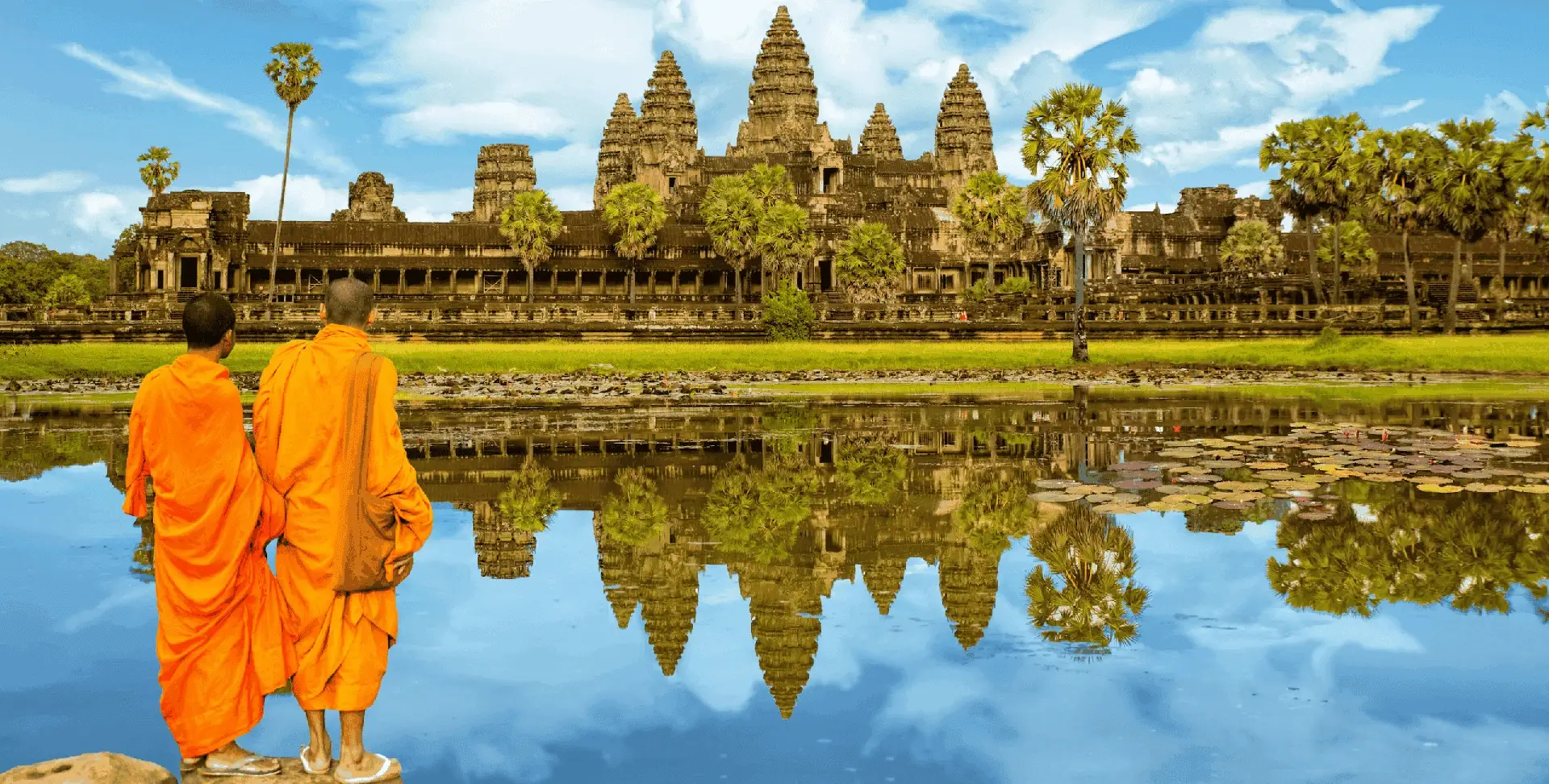
An Overview Of Traditional Vietnamese Architecture
Discover traditional Vietnamese architecture—from ancient temples and pagodas to rural stilt houses—showcasing intricate craftsmanship, symbolism, and enduring cultural heritage.
Vietnamese architecture was carried by several godfathers who influenced it: Chinese to the north and Indians and Khmer to the south, it is first in the layout of cities, palaces, temples, imperial tombs and communal houses that we discover traditional Vietnamese architecture. Cities, tombs, and palaces were drawn according to very precise astrological and geographical criteria. To determine the site, we applied here the "geomancy" science, taking into account the configuration of the stars at the time of the search for the site, and also, sometimes, stories of Yin and Yang (the image of two dragons bowing in front of the sun at the top of the roof): This is a fusion, a harmony with nature quite exceptional, combining the charm of the site and the mystery of all these calculations and parameters ...

In cities like Hanoi and Hue, the great imperial tombs, the temples of Hoa Lu, etc., responded to this architecture. The meeting with Buddhism allowed Vietnamese architecture to become rich and detach from Chinese influence.
From a technical point of view, the most important thing was the roof. Also, the architects focused all their efforts on the pillars and the frame, fixed with two ankles (without nails) and carved abundantly, unlike the Chinese framework, which was above all lacquered. The walls were often just filled with wood and brick. It is especially the temples that express this autonomy. Built in the shape of "H" "noi cong ngoai quoc," surrounded by walls on three sides and a large portico on the front, they correspond to Vietnam. Later, it was in the construction of communal houses (dinh) dedicated to genies protecting the village that Vietnamese art was fully expressed, especially from the seventeenth to the nineteenth century.

As for pagodas (chua), they often have the same plan: Three rooms in parallel connected in the middle by a corridor or small bridges. The first is like a vestibule with two huge geniuses (the good and the bad) or Happiness and Woe, as well as other little protective genies. In the middle, the incense burner, the offering trays, and the enormous prayer bells shaped like carp. In the last room, we find the representations of the most famous mandarins and bonzes and the Buddhas of the present (sakyamuni), of the past and the future (maitreya).
Vietnamese Rural Architecture
Of course we use the materials offered by nature: Wood, bamboo, palm, and rice stubble. It expresses two influences:On stilts, here too, the frame is the most important element of the construction. Often the roof is covered by thatch, red tile, or wood (black Hmong).
Modern Vietnamese architecture is distinguished by the French colonial style with neoclassical Haussmannian, Art Deco or Cabourg-style villa reminiscences. It was relayed to independence by the Neo-Stalinist Soviet architecture; one of the most beautiful jewels is the Hanoi City Hall. In short, as one Vietnamese intellectual said, the Vietnam civilization is a thousand years of French civilization.
The Art Of Vietnamese House Decoration
Modeling has created a decorative art, with rich philosophical content (when Western decorative art usually focuses on visual beauty, without any need for meaning). In the whole of Tu Linh (the four fabulous animals), we find Long (the dragon), symbol of the domination, the force, and the male character:Ly (the dragon horse) or Lân (the unicorn) symbol of desire for peace, the turtle symbolizes longevity and the phoenixymbolizes o of happiness; the dragon-phoenix couple with the pair "dragon-saurian" and "bird-immortal," symbolizing the happiness of the couple
In Vietnamese architecture, the dragon is not the prerogative of kings or emperors. He is so popular that everywhere in the country we meet him. It is part of the working life of the peasant, giving birth, giving birth to a large offspring, and so docile that women in skirts manage to dance on their backs. This not only shows the democratic character of Vietnamese culture but also the degree of popularity of the dragon.

The four fabulous animals are associated with four other animals to form the eight animals. They are Ngu the fish, Phuc the bat, Hac the mythical crane and Ho the tiger. They are often presented in Vietnamese architecture.
The fish, linked to the legend of "fish that turns into a dragon," symbolizes success. The Chinese name of the bat is Buc, a symbol of happiness. The crane, a rare and beautiful bird, embodies the bliss of the marvelous countries where there are cranes; where there are cranes, there are immortals. The tiger represents strength and is usually revered for fighting ghosts, evil spirits and evil influences.
When you travel to Vietnam, you will have opportunities to visit Vietnamese houses with it traditional architecture and sometimes you will see modern and colonial architecture.
>>> 10 Reasons Vietnam Should Be Your Next Destination
>>> Hu Tieu: From Street Food to Masterchef
Giang is a Vietnam destination expert with over a decade of experience guiding travelers through the country’s most inspiring regions. Born and raised in the Red River Delta, Giang has an intimate understanding of local traditions, cuisine, and culture. Her articles reflect her mission: to help travelers discover the authentic Vietnam — beyond the postcards — through meaningful encounters and immersive journeys.
Send us your comments about : An Overview Of Traditional Vietnamese Architecture
Required fields*
You may also like
You may also like

Alluring And Famous Islets Of Halong Bay
Explore Halong Bay’s famous islets, hidden caves, and charming landscapes—an unforgettable highlight for any Vietnam travel itinerary filled with adventure and scenic beauty.

Palace On Wheels: Experience The Great Pleasure On-Board
Discover Palace on Wheels India, the luxury train offering a royal journey through Rajasthan’s forts, palaces, wildlife parks, and the iconic Taj Mahal in unforgettable style.

Visit Vietnam In February: What To Wear In February?
Discover Vietnam in February with mild weather, vibrant Tet festivals, and blooming flower seasons. Learn what to wear and the best places to visit across the country this month.
Travel ideas
Need some inspiration? Discover some of the best tours in Vietnam, which are highly appreciated by our clients. An excellent starting point to help you choose the right trip to Vietnam, Laos, Cambodia, Burma or Thailand, whether you are traveling alone, as a couple, as a family or with friends.
And because this trip is yours, feel free to customize it as you wish!
Vietnam Itinerary 2 Weeks
Hanoi - Ninh Binh - Lao Cai - Sapa - Muong Hum market - Ha Long Bay - Hue - Danang - Hoi An - Saigon - Mekong Delta - Cai Rang floating market - Departure

The Best of Ha Giang Trekking Tours
Discover Ha Giang on trekking tours where you live local life, enjoy breathtaking views and escape the crowded routes.

Vietnam and Laos 14 days
Saigon - My Tho - Da Nang- Hoian – Hue - Hanoi - Halong Bay - Vientiane Luang Prabang - Pak Ou – Khuang Si - Luang Prabang – Departure
Vietnam Cambodia Itinerary 14 Days
Hanoi – Hoa Binh – Mai Chau – Ninh Binh – Halong bay – Hue - Danang – Hoian – Saigon – Ben Tre - Can Tho – Saigon - Siem Reap Angkor - Tonlé Sap - Siem Reap – Ta Prohm - Departure

Authentic Hoang Su Phi Trekking Tours
Hoang Su Phi trekking tours take you to stunning terraces, meet few tourists, connect with locals and enjoy authentic culture.

Honeymoon Tour Packages In Vietnam 12 Days
Saigon Arrival - City Tour – Mekong Delta – Danang – Hoian - by flight - Da Nang – Hanoi - by flight – Halong - overnight on junk – Departure
Are you interested in this tour?

Our testimonials
Whether it's a short or long tour, to discover must-see sites or to travel less-traveled paths, by car, junk, on foot, by bike or by motorbike... upon their return from their trip to Indochina, our clients tell us about their experiences. We thank them for entrusting us with the organization of their stay in Vietnam, Cambodia, Laos, Thailand and Myanmar!
Tailor-made trips to Vietnam
Are you a couple, a family, a group of friends? Are you planning a trip to Vietnam and/or Southeast Asia? Or maybe you want an individual, personalized trip, operated directly by a local agency? Perhaps you're thinking of a customized trip accompanied by a perfectly French-speaking guide and a private car with a professional driver... Are you the kind of traveler who likes to go where others don't? Our tailor-made tours adapt to your desires, your choices, your pace and your budget.... You decide, we create a trip that suits you!

Don't miss anything from Southeast Asia
The press talks about us



Comment
No comments yet. Be the first to leave a comment!