 Français
 Deutsch
 Italiano
 Português
 Español

Bac Ha or Sapa: Which Should You Choose for an Authentic Northern Vietnam Trip?
Discover the differences between Bac Ha and Sapa, from ethnic markets and traditional villages to rice terraces, trekking and mountain scenery, and find out which destination is right for your Northern Vietnam trip.
Bac Ha or Sapa? This is one of the most common questions travelers face when planning a trip to the mountains of Northern Vietnam. Both destinations offer spectacular scenery, fascinating ethnic cultures and opportunities to experience a very different side of the country from the busy cities and coastline.
Yet Bac Ha and Sapa offer distinctly different travel experiences.
Sapa is the more famous destination, known for its dramatic mountains, spectacular rice terraces, trekking routes and easy access to Mount Fansipan, the highest peak in Vietnam. It has a wide choice of hotels, restaurants and activities, making it particularly convenient for first-time visitors to Northern Vietnam.
Bac Ha, on the other hand, is quieter and more rural. It is best known for its colorful ethnic markets, traditional villages and the Flower Hmong communities who live across the surrounding valleys and mountains. For travelers looking for a slower pace and a deeper connection with local life, Bac Ha offers a more intimate experience.
So, should you visit Bac Ha or Sapa?
The answer depends on what you want from your journey. This guide compares the two destinations by scenery, trekking, ethnic culture, markets, atmosphere, accommodation and accessibility to help you make the right choice.

1. Bac Ha: Traditional Markets, Ethnic Culture and Rural Landscapes
1.1. A quieter side of Northern Vietnam
Located in Lao Cai Province, around 70 km from Lao Cai City, Bac Ha lies among rolling mountains, agricultural valleys and scattered ethnic villages.
Compared with Sapa, Bac Ha receives fewer international visitors and has retained a more rural character. The surrounding countryside is home to several ethnic communities, including Flower Hmong, Tay, Dao, Nung and Phu La people.
Daily life here remains closely connected to agriculture. Corn, rice and other crops are cultivated on the hillsides, while traditional textiles, local food and livestock remain important parts of village life.
For travelers searching for authentic Northern Vietnam experiences, Bac Ha can be particularly rewarding. Instead of focusing on major attractions, a visit often revolves around simple experiences: walking through villages, visiting a local market, staying with a host family or watching everyday agricultural life unfold around you.

1.2. The famous Bac Ha Sunday Market
The Bac Ha Sunday Market is undoubtedly one of the highlights of the region.
Every Sunday, people from surrounding mountain communities come to Bac Ha to buy and sell agricultural products, livestock, food, clothing, handicrafts and household goods. The market is also an important social gathering place for local communities.
Flower Hmong people are particularly recognizable for their colorful traditional clothing, with intricate embroidery and vivid patterns creating one of the most memorable scenes in the Northern Vietnamese highlands.
Beyond souvenirs and handicrafts, the market offers a glimpse into everyday mountain life. Visitors may see livestock being traded, local vegetables being sold, traditional fabrics displayed alongside household products, and families enjoying regional dishes together.
The experience is especially interesting for travelers who want to see a market that serves the local population rather than simply a market designed for tourists.
Another market worth considering is Can Cau Market, located roughly 20 km from Bac Ha. Traditionally held on Saturdays, it is set in a scenic mountain valley and is known for its colorful atmosphere, local products and livestock trading.
1.3. Gentle walks through villages
Bac Ha is also a good choice for travelers who enjoy walking but do not necessarily want demanding mountain treks.
The surrounding countryside features rolling hills, agricultural fields, small valleys, village paths and traditional houses. Walking routes can connect villages and provide opportunities to observe rural life at a relaxed pace.
Rather than chasing dramatic viewpoints, a walk around Bac Ha is often about the details: farmers working in the fields, children playing around village homes, traditional clothing, local architecture and the changing landscape of the mountains.
This makes Bac Ha particularly suitable for families, slower travelers and visitors who prefer cultural discovery over physically demanding trekking.

1.4. The Hmong King’s Palace
One of Bac Ha’s notable historical attractions is the Hmong King’s Palace, also known as Hoang A Tuong Palace.
Built in the early 20th century, the building reflects a combination of European, Chinese and traditional local architectural influences. Its history is closely connected with the Hmong leadership of the region and provides an interesting complement to the area’s natural and cultural attractions.
1.5. The atmosphere of Bac Ha
Bac Ha is best suited to travelers who appreciate quiet mountain landscapes, traditional markets, village life and a slower travel rhythm.
It does not have the same concentration of modern hotels, cafés and tourist facilities as Sapa. For some travelers, this is precisely its appeal.
If your ideal Northern Vietnam experience involves waking up in a peaceful village, exploring a colorful market and walking through agricultural landscapes rather than spending time in a busy mountain town, Bac Ha may be the destination for you.
2. Sapa: Rice Terraces, Trekking and Dramatic Mountain Scenery
2.1. Northern Vietnam’s best-known mountain destination
Sapa has been attracting travelers for generations and has become one of the most famous destinations in Northern Vietnam.
Located in the Hoang Lien Son mountain range, the town sits at an elevation of around 1,500 meters and is surrounded by dramatic mountains, deep valleys and terraced rice fields.
The region is also home to several ethnic communities, including Black Hmong, Red Dao, Tay and Giay people.
While Sapa has developed considerably as a tourist destination, the surrounding countryside still offers opportunities to discover traditional villages and experience the spectacular landscapes of the Vietnamese highlands.

2.2. Spectacular rice terraces and mountain valleys
One of Sapa’s greatest attractions is its scenery.
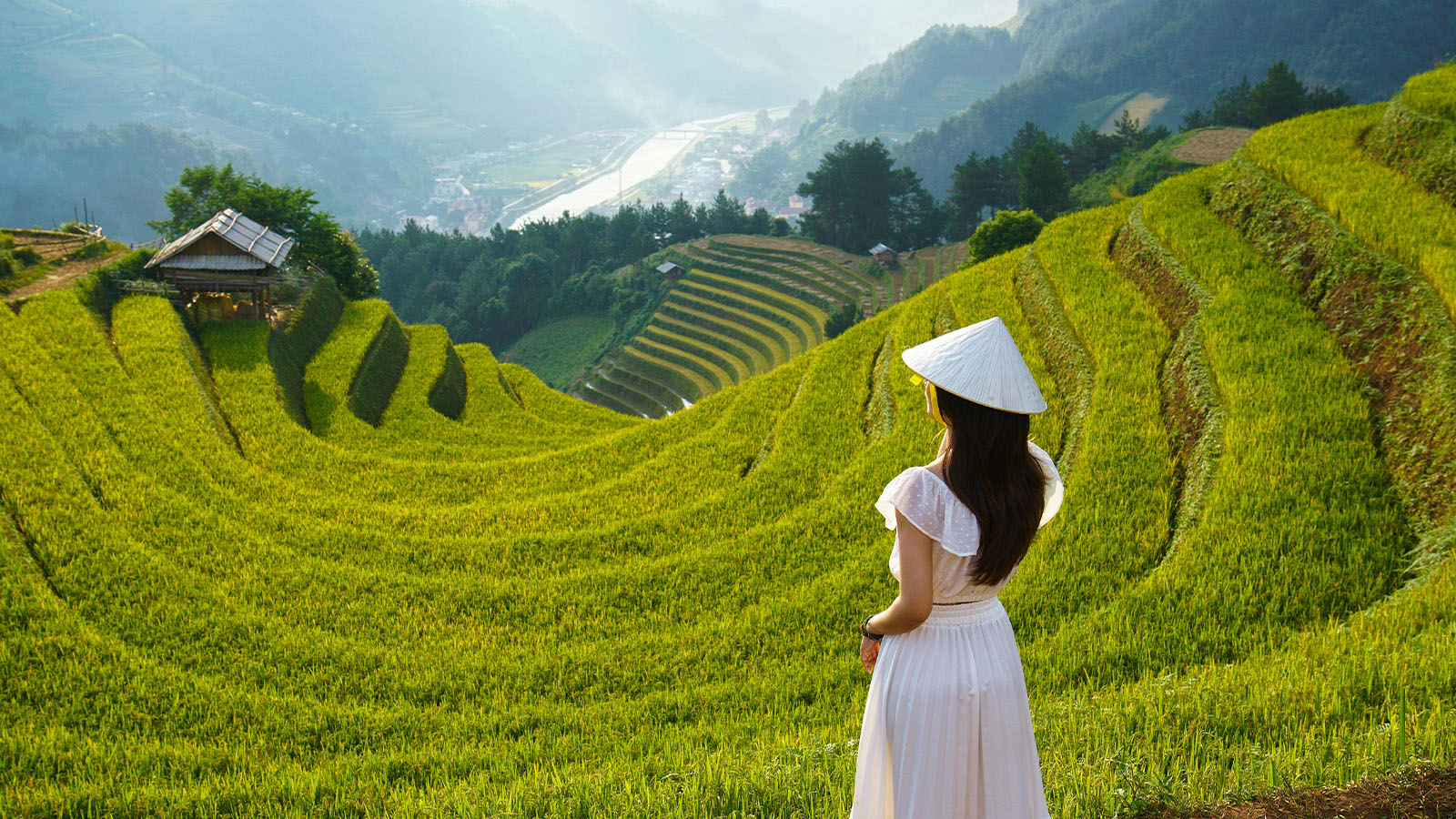
The Muong Hoa Valley, together with villages such as Lao Chai and Ta Van, offers some of the most recognizable mountain landscapes in Northern Vietnam. Rice terraces follow the contours of the hillsides, while streams, forests and villages create layers across the valleys.
The appearance of the terraces changes throughout the year.
During the growing season, the fields become increasingly green. Around harvest time, the terraces turn golden, creating particularly impressive conditions for photography.
For travelers visiting Vietnam for the first time, these dramatic landscapes can be one of the most memorable parts of a Northern Vietnam itinerary.
2.3. Trekking in Sapa
If trekking is one of your main priorities, Sapa offers more variety than Bac Ha.
There are short walks between villages for travelers looking for a relatively gentle experience, as well as longer and more challenging routes through valleys and mountain terrain.
Popular trekking areas include Lao Chai, Ta Van and Giang Ta Chai. Depending on the route, travelers may walk alongside rice terraces, cross streams, pass through bamboo forests and visit ethnic villages.
More experienced hikers can also explore higher-altitude routes in the Hoang Lien Son range or undertake the journey to Fansipan.
For travelers who want to combine spectacular landscapes with outdoor activities, Sapa provides a broader range of trekking possibilities.
2.4. Fansipan: the Roof of Indochina
At 3,143 meters, Fansipan is the highest mountain in Vietnam and one of the major attractions around Sapa.
Travelers who enjoy hiking can choose a multi-day mountain expedition, while those who prefer a more comfortable experience can reach the summit area by cable car.
The weather at the summit can change quickly, and clouds are common. Rather than being a disadvantage, the mist often creates a distinctive mountain atmosphere, with views appearing and disappearing among the clouds.

2.5. A rich diversity of ethnic cultures
Sapa and its surrounding villages are home to several ethnic communities, each with their own traditions, clothing, crafts and ways of life.
A village visit may offer opportunities to learn about traditional textile production, indigo dyeing, handicrafts, local agriculture and regional cuisine.
However, travelers should also be aware that Sapa is a well-established tourist destination. Some villages and activities are more commercialized than those in less-visited areas.
Choosing a local guide, visiting less crowded villages and spending more time outside the town center can help create a more meaningful cultural experience.
2.6. A more developed and lively atmosphere
The biggest difference between Sapa and Bac Ha is perhaps the atmosphere.
Sapa has a busy town center filled with hotels, restaurants, cafés, shops and tourist services. It is considerably more developed and easier to navigate for international travelers.
This convenience comes with more visitors, particularly during peak travel periods.
However, Sapa’s touristy center does not represent the entire region. Once you head into the surrounding valleys and villages, the scenery becomes much quieter and the experience changes dramatically.
3. Bac Ha or Sapa: Which One Should You Choose?
The easiest way to decide between Bac Ha and Sapa is to think about the type of experience you want.
For atmosphere
Choose Bac Ha if you want:
A quiet, rural and traditional mountain experience.
Choose Sapa if you want:
A livelier destination with more hotels, restaurants, activities and tourist infrastructure.
Bac Ha feels slower and more intimate, while Sapa offers a combination of mountain scenery and modern travel facilities.
For ethnic markets
Choose Bac Ha.
The Sunday market is one of the strongest reasons to visit the region. It offers a fascinating combination of local trade, livestock, food, traditional clothing and social interaction.
If visiting an ethnic market is a major priority, try to plan your itinerary around the Sunday market in Bac Ha.
Sapa also has markets and local trading areas, but the experience is generally more influenced by tourism.

For trekking
Choose Sapa.
Sapa has a wider selection of trekking routes, from easy village walks to challenging mountain adventures.
Its combination of deep valleys, steep mountains and rice terraces provides greater variety for hikers.
Bac Ha is better suited to gentle walks through villages and agricultural landscapes.
For landscapes
Choose Sapa for dramatic scenery.
The mountains and rice terraces around Sapa create some of the most spectacular landscapes in Northern Vietnam.
Bac Ha offers a gentler landscape of rolling hills, cornfields, valleys and rural villages. Its beauty is less dramatic but often feels more intimate.
For cultural immersion
Choose Bac Ha if your priority is a quieter and more rural experience.
The region’s smaller scale and lower level of tourism can make it easier to observe everyday life without the feeling of being in a major tourist destination.
Sapa still offers considerable cultural diversity, particularly in the surrounding villages, but visitors should expect more tourism-related activity.
For avoiding crowds
Choose Bac Ha.
Bac Ha is generally quieter than Sapa and is a natural choice for travelers who prefer destinations away from the busiest tourist routes.
Sapa can become crowded, but traveling early in the morning, exploring villages outside the town and choosing less-visited trekking routes can provide a much more peaceful experience.

For a first trip to Northern Vietnam
Choose Sapa if you want a convenient introduction to the mountains.
Sapa combines impressive landscapes, trekking, ethnic villages, accommodation options and easy access to major attractions.
Choose Bac Ha if you already know you prefer cultural immersion and rural travel.
For travelers who value traditional markets and local life more than dramatic mountain viewpoints, Bac Ha can be a more rewarding introduction to the region.
4. Why Not Combine Bac Ha and Sapa?
If you have enough time, you do not necessarily have to choose.
Combining Sapa and Bac Ha allows travelers to experience two different sides of Northern Vietnam in one journey.
Sapa provides the dramatic mountain scenery, rice terraces and trekking opportunities, while Bac Ha adds colorful markets, quieter villages and a more rural atmosphere.
A three-day itinerary could look like this:
Day 1: Sapa and Muong Hoa Valley
Arrive in Sapa and explore the Muong Hoa Valley. Walk through Lao Chai and Ta Van villages, passing rice terraces, streams and traditional houses.
For a more immersive experience, spend the night in a local homestay.
Day 2: Trekking and transfer to Bac Ha
Continue trekking toward Giang Ta Chai, passing through bamboo forests, streams, rice terraces and mountain paths.
After lunch, travel toward Bac Ha and spend the night in a local homestay or family-run guesthouse.
Day 3: Bac Ha Market
If your trip falls on Sunday, visit Bac Ha’s famous Sunday Market in the morning.
After exploring the market, continue with a village walk or visit the Hmong King’s Palace before heading back toward Hanoi or continuing to another destination in Northern Vietnam.
This combination creates a balanced experience: spectacular landscapes in Sapa and cultural discovery in Bac Ha.
5. Practical Tips for Visiting Bac Ha and Sapa
When to visit
Sapa can be particularly enjoyable from March to May and September to November, when temperatures are generally comfortable for exploring and trekking.
The appearance of the rice terraces changes throughout the agricultural calendar, so travelers interested in photography should consider the seasonal landscape when planning their trip.
Bac Ha can be visited throughout much of the year. September to November is particularly attractive for comfortable conditions and mountain scenery, while the cooler months can be pleasant for exploring markets and villages.
If the Bac Ha Sunday Market is important to you, remember that your itinerary needs to include a Sunday morning in Bac Ha.

How long should you stay?
Bac Ha: 1–2 nights
This is generally enough to visit the main market, explore nearby villages and experience the local atmosphere.
Sapa: 2–3 nights
A longer stay allows time for trekking, exploring ethnic villages, enjoying the mountain scenery and potentially visiting Fansipan.
If combining both destinations, allow at least three days, although four or five days will give you more time to travel at a relaxed pace.
Getting there
Most travelers traveling from Hanoi reach the region via Lao Cai.
Overnight trains and road transfers are traditional options, while modern limousine buses provide a convenient alternative for travelers who prefer a direct journey by road.
From Lao Cai, Sapa and Bac Ha can be reached by road. A private car is particularly useful if you want to combine both destinations or stop at viewpoints and villages along the way.
Where to stay
Sapa offers the widest range of accommodation, from international-standard hotels and mountain resorts to boutique properties and village homestays.
Bac Ha has a smaller selection, with family-run guesthouses and homestays being particularly common.
For travelers seeking a cultural experience, staying in a homestay can be one of the most rewarding ways to experience the mountains, especially when combined with a local dinner and time spent talking with your hosts.
6. Bac Ha or Sapa: Quick Guide
Choose Bac Ha if you:
-
Love traditional ethnic markets
-
Prefer quiet and rural destinations
-
Want a slower travel experience
-
Are interested in local culture and everyday life
-
Prefer gentle walks rather than demanding treks
-
Want to travel away from the busiest tourist destinations
Choose Sapa if you:
-
Want spectacular rice terraces and mountain scenery
-
Enjoy trekking and hiking
-
Want to visit Fansipan
-
Prefer a wider choice of hotels and restaurants
-
Are visiting Northern Vietnam for the first time
-
Want a destination with more tourist infrastructure
Choose both if you:
-
Have three or more days available
-
Want to combine landscapes and culture
-
Want to experience both trekking and ethnic markets
-
Are looking for a more complete Northern Vietnam itinerary
Bac Ha or Sapa: Which One Is Right for Your Vietnam Journey?
There is no single answer to the question of Bac Ha or Sapa because the two destinations offer different ways of experiencing Northern Vietnam.
Sapa is the destination for dramatic landscapes, terraced rice fields, mountain trekking and the impressive Hoang Lien Son range. Its developed tourism infrastructure also makes it a convenient choice for first-time visitors.
Bac Ha offers a quieter alternative, with traditional markets, rural villages, colorful ethnic cultures and a slower pace of life. It is particularly appealing to travelers who want to move beyond the most famous destinations and spend more time observing everyday life in the mountains.
And for travelers with enough time, combining both may be the most complete option. Start with the spectacular valleys and trekking routes of Sapa, then continue to Bac Ha for its markets and peaceful countryside.
Whether you choose one or both, the mountains of Northern Vietnam offer much more than beautiful scenery. They reveal a different rhythm of life, shaped by agriculture, mountains, traditions and diverse ethnic communities — making this region one of the most memorable parts of a journey through Vietnam.
>>> Top 10 Best Things to Do and See in Bac Ha, Vietnam
>>> Sapa or Ha Giang: how to choose the right northern loop
Giang is a Vietnam destination expert with over a decade of experience guiding travelers through the country’s most inspiring regions. Born and raised in the Red River Delta, Giang has an intimate understanding of local traditions, cuisine, and culture. Her articles reflect her mission: to help travelers discover the authentic Vietnam — beyond the postcards — through meaningful encounters and immersive journeys.
Send us your comments about : Bac Ha or Sapa: Which Should You Choose for an Authentic Northern Vietnam Trip?
Required fields*
You may also like

You may also like

Buying Clothes in Vietnam in 2027: A Practical Shopping Guide for Travelers
Discover where to buy clothes in Vietnam, what to shop for, tailoring tips, prices, silk and traditional clothing, and how to avoid common shopping mistakes.

Where to Go in Vietnam in November: Best Places to Visit & Travel Guide
Discover where to go in Vietnam in November, from cool northern mountains and Ha Long Bay to sunny beaches, the Mekong Delta and Phu Quoc.

Flights from Switzerland to Vietnam: How to Fly from Switzerland to Vietnam
Planning a trip from Switzerland to Vietnam? Discover airports, airlines, stopover options, flight times, ticket prices, visa requirements, and practical tips for a smooth journey.
Travel ideas
Need some inspiration? Discover some of the best tours in Vietnam, which are highly appreciated by our clients. An excellent starting point to help you choose the right trip to Vietnam, Laos, Cambodia, Burma or Thailand, whether you are traveling alone, as a couple, as a family or with friends.
And because this trip is yours, feel free to customize it as you wish!
Vietnam Itinerary 2 Weeks
Hanoi - Ninh Binh - Lao Cai - Sapa - Muong Hum market - Ha Long Bay - Hue - Danang - Hoi An - Saigon - Mekong Delta - Cai Rang floating market - Departure

The Best of Ha Giang Trekking Tours
Discover Ha Giang on trekking tours where you live local life, enjoy breathtaking views and escape the crowded routes.

Vietnam and Laos 14 days
Saigon - My Tho - Da Nang- Hoian – Hue - Hanoi - Halong Bay - Vientiane Luang Prabang - Pak Ou – Khuang Si - Luang Prabang – Departure
Vietnam Cambodia Itinerary 14 Days
Hanoi – Hoa Binh – Mai Chau – Ninh Binh – Halong bay – Hue - Danang – Hoian – Saigon – Ben Tre - Can Tho – Saigon - Siem Reap Angkor - Tonlé Sap - Siem Reap – Ta Prohm - Departure

Authentic Hoang Su Phi Trekking Tours
Hoang Su Phi trekking tours take you to stunning terraces, meet few tourists, connect with locals and enjoy authentic culture.

Honeymoon Tour Packages In Vietnam 12 Days
Saigon Arrival - City Tour – Mekong Delta – Danang – Hoian - by flight - Da Nang – Hanoi - by flight – Halong - overnight on junk – Departure
Are you interested in this tour?


Our testimonials
Whether it's a short or long tour, to discover must-see sites or to travel less-traveled paths, by car, junk, on foot, by bike or by motorbike... upon their return from their trip to Indochina, our clients tell us about their experiences. We thank them for entrusting us with the organization of their stay in Vietnam, Cambodia, Laos, Thailand and Myanmar!
Tailor-made trips to Vietnam
Are you a couple, a family, a group of friends? Are you planning a trip to Vietnam and/or Southeast Asia? Or maybe you want an individual, personalized trip, operated directly by a local agency? Perhaps you're thinking of a customized trip accompanied by a perfectly French-speaking guide and a private car with a professional driver... Are you the kind of traveler who likes to go where others don't? Our tailor-made tours adapt to your desires, your choices, your pace and your budget.... You decide, we create a trip that suits you!


Don't miss anything from Southeast Asia
The press talks about us




Comment
No comments yet. Be the first to leave a comment!