 Français
 Deutsch
 Italiano
 Português
 Español

The meaning behind five-colour sticky rice in Mai Chau and Lao Cai
A traveller's guide to five-colour sticky rice in northern Vietnam: the meaning of each colour, the magenta leaves, turmeric and ash behind them, how White Thai and Tay traditions differ, and where to taste this coloured sticky rice in Mai Chau, Bac Ha and around Sa Pa.
Five-colour sticky rice: a festive dish from Vietnam's northern hills
The first time a tray of five-colour sticky rice is set down in front of you, it is hard to decide whether to photograph it or eat it. Purple, red, yellow, green and white sit side by side, each a mound of glossy grains still warm from a wooden steamer. In the stilt-house villages of Mai Chau and the hill communes of Lao Cai, this is not something you find on every street corner. It is festival food, made for Tet, weddings, new houses and the moments when a family wants to give thanks.
Known in Vietnamese as xôi ngũ sắc, the dish belongs above all to the Thai, Tay, Giay and other upland communities of the north. This guide looks at what the five colours mean, which leaves and roots create them, how the meaning shifts between the White Thai of Mai Chau and the Tay of Lao Cai, and where travellers can realistically taste five-colour sticky rice, or even help to make it, on a trip through the region.

What the five colours mean
Most explanations of five-colour sticky rice begin with the Eastern idea of the five elements. In the version you will hear most often, white stands for metal, green for wood, purple or a dark shade for water, red for fire and yellow for earth. Put the five together on one tray and you have a small picture of balance: nothing missing, nothing dominating. That is why the dish is so closely tied to moments of transition, such as a new year, a marriage or a new home, when people want the coming period to start in harmony.
There is a second, more social reading. Several provincial culture pages describe a tray of five-colour sticky rice as a symbol of togetherness, because five separate colours are pressed into one shared dish and eaten by everyone at the table. When a host family places five-colour sticky rice at the centre of the meal, it is also a gesture of respect towards guests and, on ritual days, towards ancestors.
Why the meanings change from village to village
Here is the part most short articles skip: there is no single "correct" meaning for each colour. Ask a Thai cook in Mai Chau and a Tay cook in Lao Cai what red means in their coloured sticky rice and you may get two different answers, both of them sincere. The five-element frame is shared, but the personal meanings, such as love, faithfulness, prosperity or the forest, are passed down within families and communities. The comparison table further down shows how the same five colours speak slightly different languages in each valley.
Leaves, roots and ash: where the colours come from
What makes five-colour sticky rice special in the villages is that the traditional colours come from plants, roots and fruits rather than artificial food colouring. The traditional palette comes almost entirely from the garden and the forest edge.

Magenta plant (lá cẩm). This is the workhorse of the whole dish. A Tay cook in Nghia Do, whose coloured sticky rice is ordered by neighbours for family occasions, explained to Lao Cai Newspaper that there are two kinds of cẩm. They look almost identical and share the same purple flowers, but one has narrower, longer leaves and gives red, while the other has broader leaves with thicker veins and a pale edge and gives purple. Boil the purple type and you get purple rice. Pound the leaves fresh and mix the juice with ash from burnt glutinous rice straw, in the right proportion, and the same plant turns the rice blue. Many Tay families simply grow cẩm around the house so it is always to hand.
Turmeric. Fresh turmeric root, pounded and squeezed, gives the warm yellow that represents plenty.
Gac fruit. In some kitchens, red comes from the orange-red flesh of the gac fruit rather than from the red magenta leaf.
Pandan and ginger leaves. Green is made with pandan (the fragrant lá dứa nếp variety) or with ginger leaves. Among the Giay of Lao Cai, women traditionally went into the forest to gather the leaves they needed for their five-colour sticky rice.
Pomelo peel ash. At Bac Ha, cooks from several groups burn the skin of local pomelos into ash and soak it with the rice to obtain one of the shades, a technique that is far less widely described than the leaves above.
White. The fifth colour is simply the rice itself, left untouched, which is why village five-colour sticky rice always looks softer than the neon versions sold in some cities.

Soaking and steaming in a wooden steamer
Good coloured sticky rice starts with good grain. In Mai Chau, cooks insist on glutinous rice grown on the terraced fields of the valley; in Bac Ha, it is the local strain that gives the dish its particular chew. Methods vary more than you might expect. A Thai cook in Mai Chau describes soaking the rice for many hours, then steaming it twice: once until cooked, then again after stirring to make it softer and more elastic. The Tay cook in Nghia Do, by contrast, soaks each portion in warm coloured water for about half an hour so the grains take the colour quickly.
The steaming itself happens in a tall wooden steamer (chõ) set over a pot of boiling water. A typical steamer in a Tay home holds around three kilograms of rice and needs 40 to 50 minutes over an even, moderate fire. Cooks leave roughly ten centimetres of space below the rim, because the rice swells to the top as it cooks. When all five colours share one steamer, the darkest rice goes at the bottom and the lightest on top, or the layers are separated by small woven bamboo screens so the colours do not bleed. Once ready, the coloured sticky rice is often wrapped in dong leaves to keep it warm and supple.
A five-petal flower or swirled colours
How five-colour sticky rice is presented depends on the community and the occasion. Some families shape the rice into a five-petal flower, one colour per petal. Others mix the colours loosely so each handful contains a little of everything. In Bac Ha, the coloured portions are steamed separately and then combined in a single container with the white rice on top. Whatever the layout, the meaning is the same: luck, abundance and a wish for things to go well.

Mai Chau: the White Thai and their festive trays
Mai Chau is where many travellers first meet five-colour sticky rice, usually on the floor of a stilt house after a day of cycling between rice fields. The valley, once part of Hoa Binh province and now within Phu Tho after the 2025 provincial merger, is home mainly to White Thai communities, and coloured sticky rice plays a quiet but important role in their calendar.
In Chieng Chau commune, a Thai cook interviewed by Hoa Binh Newspaper called five-colour sticky rice an indispensable dish on Thai trays during holidays and Tet. For her family, red stands for abundance, yellow for having enough, purple for faithfulness, white for pure love and blue for the mountains of the northwest forests. The year-end meal is a serious affair: families invite the village shaman to make offerings to the ancestors in the last days of the lunar year, and the five-colour sticky rice takes its place among grilled fish, dried meat and wild vegetables.
There is also a lovely detail in how a Thai tray is organised. Dishes are traditionally brought in a set order, starting with the dipping sauce and ending with the rice, which comes last. So when five-colour sticky rice finally arrives, it closes the meal rather than opening it.
In Lac village, purple sticky rice made with magenta leaves from the Hoa Binh forests is especially well known. A stilt-house owner there told Vietnam Pictorial that it is a traditional dish offered to the Kitchen Gods, and that it was only after the village began welcoming visitors that it became something guests were served. It is usually eaten with chicken grilled with mac khen, the wild pepper of the northwest, which gives the meat a smoky, slightly numbing fragrance.
Not to be confused with bamboo-tube rice
Mai Chau is also famous for cơm lam, glutinous rice cooked inside sections of bamboo over an open fire. The two often appear on the same table, and some travel articles merge them, but they are different dishes. Cơm lam is usually plain white and takes its flavour from the bamboo; five-colour sticky rice is steamed loose in a wooden steamer and takes its colour from leaves and roots.
Lao Cai: Tay homes, Giay kitchens and the Bac Ha market
Lao Cai offers more variety, simply because more communities live there side by side. Since the 2025 merger with Yen Bai, the province also includes the Muong Lo valley, where Thai families make their own five-colour sticky rice with Tu Le glutinous rice.

Tay families in Nghia Do
In the Tay villages of Nghia Do, five-colour sticky rice is a fixture of every important gathering: Tet, weddings, harvest festivals and ancestor offerings. It is placed at the centre of the feast tray, where it adds colour and carries spiritual weight at the same time. For Tay families, green expresses a longing for peace and the colour of the great forests, white means purity and sincerity, red stands for the will to live and for solidarity, yellow for prosperity, and purple for a lasting, faithful love. It is eaten with grilled pork, fish or chicken, or simply with sesame salt or peanut salt.
Interestingly, the most skilled cooks no longer stop at five. The Nghia Do cook mentioned above can now produce seven colours or more from the same leaves, by changing how she boils, pounds or mixes them with ash. Classic five-colour sticky rice remains the reference, but the craft is very much alive.
Giay families around Sa Pa
The Giay, who live in valleys such as Ta Van near Sa Pa, prepare coloured sticky rice for the new year, weddings and anniversaries. According to a cultural story published with the ASEAN Centre for Biodiversity, their colours are purple, blue, yellow, red and white, and their coloured sticky rice expresses both the five elements and a wish for love. It is a reminder that the same idea travels between neighbouring groups while picking up a slightly different accent in each one.

Sunday steamers at Bac Ha
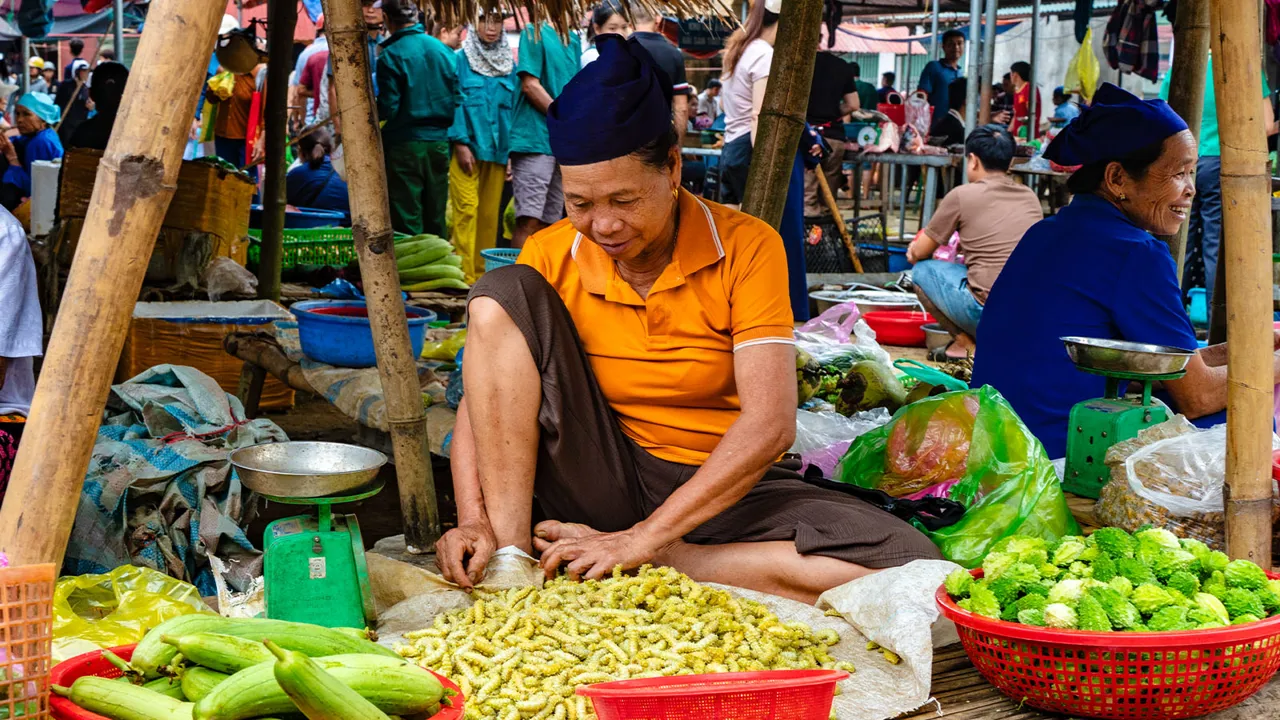
If you want to see coloured sticky rice in a public setting rather than a private home, Bac Ha's Sunday market is the place. In the food section, Tay, Dao, Mong and Thai cooks set out their steamers of five-colour sticky rice made from rice grown around Bac Ha. Locals buy coloured sticky rice for breakfast as well as for housewarmings, weddings and death anniversaries, so you will see it wrapped to take home as often as eaten on the spot. Arrive in the morning: by late in the day, the best steamers are often empty.
How the meanings compare between communities
The table below brings together what cooks and local sources say about five-colour sticky rice in each area. It is not a fixed rulebook; individual families may tell you something else.
|
Colour |
White Thai, Mai Chau |
Tay, Nghia Do (Lao Cai) |
Common five-element reading |
|
Red |
Abundance |
The will to live, solidarity |
Fire |
|
Yellow |
Having enough, fullness |
Prosperity, plenty |
Earth |
|
Purple / dark |
Faithfulness |
Lasting, faithful love |
Water |
|
Green / blue |
The mountains and forests |
Peace, the great forests |
Wood |
|
White |
Pure love |
Purity, sincerity |
Metal |
Tasting five-colour sticky rice on your trip
It is worth setting expectations honestly. Five-colour sticky rice is occasion food, so it is not on the menu of every restaurant in the north. The most reliable ways to taste five-colour sticky rice are a home-cooked meal in a Mai Chau stilt house (it helps to ask your host in advance), the food section of the Bac Ha Sunday market, and Tay or Giay family homes in Nghia Do and around Sa Pa. Timing also matters: the weeks around Tet and the lunar new year, the wedding season after the harvest and village festivals give you the best chance of seeing a full tray of five-colour sticky rice rather than a single colour.
In Hanoi you will find coloured sticky rice sold from baskets and small shops, and some of it is very good. Just be aware that not every vendor uses natural ingredients. Bright, uniform pinks and greens are usually a sign of commercial colouring, while naturally coloured sticky rice tends to be softer in tone and smells faintly of leaves.
What does it taste like?
Less dramatic than it looks, and that is a compliment. Five-colour sticky rice is not sweet and not seasoned. The pleasure lies in the texture, chewy and glossy without being wet, and in small differences between the colours: the yellow carries a gentle earthiness from the turmeric, the green a soft, grassy fragrance from pandan, and the purple and red are almost neutral, with just a hint of the leaf. In upland homes, five-colour sticky rice is eaten by hand, pressed into a small ball and dipped into sesame salt or shared alongside grilled meat and fish.

Mai Chau or Lao Cai: which fits your trip?
If you have limited time and want a gentle introduction, Mai Chau is the easier choice. It is an overland trip from Hanoi, combines well with Pu Luong, and homestay meals in the Thai villages make it simple to taste the purple rice and grilled chicken in context. Lao Cai suits travellers who enjoy markets and want to see several communities in a few days: Bac Ha on a Sunday, the Tay stilt houses of Nghia Do and the Giay and Dao valleys near Sa Pa. With more time, the two can be linked in one northern loop, which lets you compare Thai and Tay five-colour sticky rice for yourself.
Small courtesies at the table
A few habits will make the experience more comfortable for everyone. Ask before photographing a cook, and especially before photographing offerings on an ancestral altar or a ceremonial tray. If five-colour sticky rice has been prepared for a ritual, wait for your host to invite you before eating any of it. Take a modest portion first; there is usually more, and finishing what you are given is appreciated. Wash your hands if you are eating sticky rice with your fingers, as your hosts will. And do ask what the colours mean in that family. Most cooks are happy to explain, and ask your host what the colours mean in their family or community, as traditions can vary from one place to another.

Five-colour sticky rice: frequently asked questions
What is five-colour sticky rice called in Vietnamese?
It is called xôi ngũ sắc, usually written without accents as xoi ngu sac. "Xôi" means steamed sticky rice and "ngũ sắc" means five colours. You will also see it spelt five-coloured sticky rice, or five color sticky rice in American guides.
What do the five colours of sticky rice symbolise?
They are usually linked to the five elements: white for metal, green for wood, purple or dark for water, red for fire and yellow for earth. Each community adds its own meanings, such as love, faithfulness, prosperity or the forest, so the symbolism changes slightly from village to village.
Is five-colour sticky rice naturally coloured?
In the villages, yes. Traditional cooks use magenta leaves, turmeric, gac fruit, pandan or ginger leaves and sometimes plant ash. Some city vendors use commercial food colouring, which usually looks brighter and more uniform.
What does five-colour sticky rice taste like?
It is mild, chewy and slightly fragrant rather than sweet. Each colour carries a faint note of its plant, such as earthy turmeric or grassy pandan. It is usually eaten with sesame salt or with grilled chicken, pork or fish.

Is five-colour sticky rice vegetarian and gluten-free?
The rice itself is plant-based, and glutinous rice contains no gluten despite its name. Accompaniments often include grilled meat, so mention any dietary needs to your host or guide in advance.
When do people in Vietnam eat five-colour sticky rice?
It is made mainly for Tet and the lunar new year, weddings, housewarmings, harvest festivals, death anniversaries and offerings to ancestors. At Bac Ha market it is also sold on Sunday mornings.
Where can travellers try five-colour sticky rice in Vietnam?
The best places are Thai homestays in Mai Chau, the Sunday market at Bac Ha, and Tay or Giay family homes around Nghia Do and Sa Pa in Lao Cai province. Asking a host family in advance gives you the best chance of seeing five-colour sticky rice prepared.
A dish that tells you where you are
Five-colour sticky rice looks like one dish, but it is really many. The purple rice offered to the Kitchen Gods in Lac village, the five-petal tray at the centre of a Tay wedding in Nghia Do and the steamers lined up at Bac Ha on a Sunday morning all share the same grain and the same leaves, yet each tells its own story about family, land and the year ahead. If you taste five-colour sticky rice in the place it comes from, ideally with the cook nearby to explain her colours, you will understand much more about the northern hills than any single photograph can show.

Bringing the northern hills to your own table
If you would like a slower look at these traditions, the team at Vietnam Original Travel can shape a northern itinerary around five-colour sticky rice and the people who make it, with a stilt-house meal in Mai Chau, a Sunday morning at Bac Ha or an afternoon with a Tay family in Nghia Do. Cooking sessions with local hosts can be arranged on request as part of a tailor-made trip. Share your dates, your pace and what you are curious about, and we will suggest a route that leaves room for the table as well as the views.
Ha Pham is a travel photographer devoted to capturing the soul of Vietnam through his lens. His photos reveal the harmony between people and landscapes — from the golden rice terraces of Mu Cang Chai to the peaceful floating markets of the Mekong Delta. Ha believes that every image tells a story, and his work brings to life the emotions, colors, and textures that make traveling across Vietnam unforgettable.
Send us your comments about : The meaning behind five-colour sticky rice in Mai Chau and Lao Cai
Required fields*
You may also like
You may also like

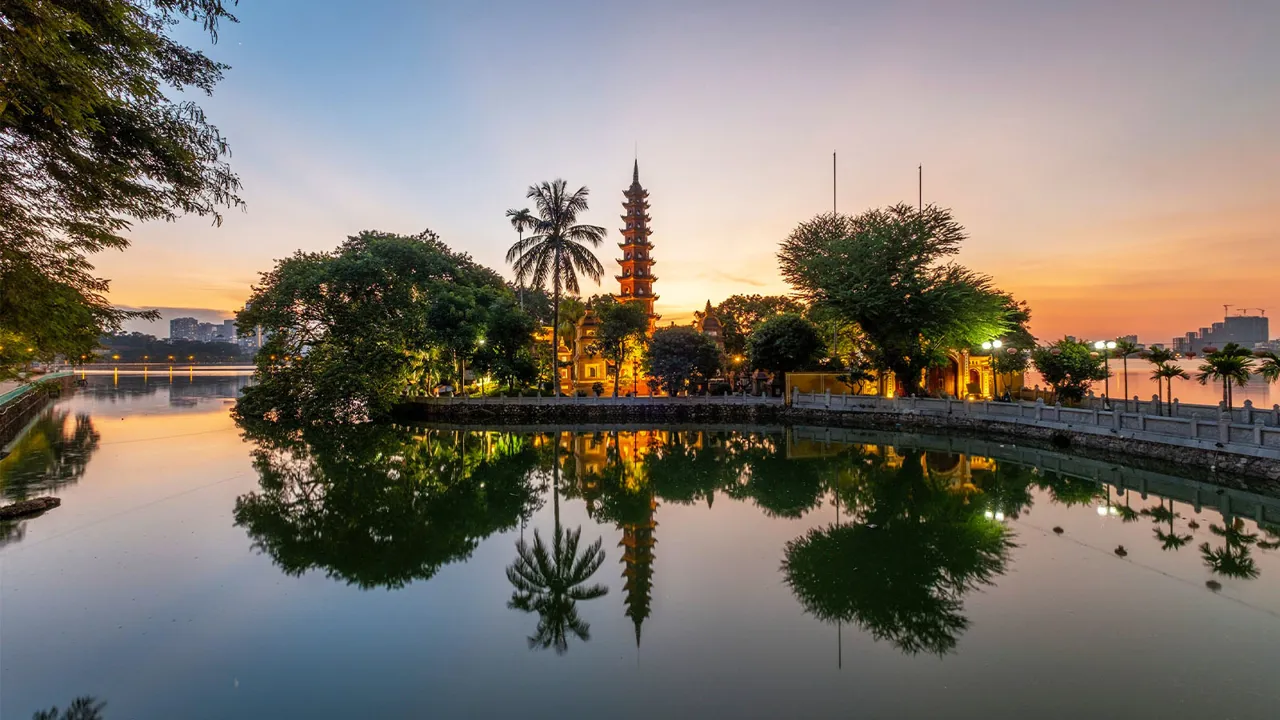
West Lake Hanoi: Things to Do, Attractions & Travel Tips
Discover West Lake Hanoi, from peaceful lakeside walks and sunset views to historic temples, lotus ponds, cafés and local experiences. Find out what to see, do and know before visiting.

Long Coc tea hills: Phu Tho's island-like tea country near Hanoi
A practical guide to the Long Coc tea hills, a Phu Tho tea landscape about three hours from Hanoi. Find out when dawn mist is most likely, how to get there, whether one day is enough, where to sleep and how to pair the hills with Xuan Son National Park.

Chè – Vietnamese Sweet Soups and the Sweet World of Traditional Vietnamese Desserts
Discover Chè, Vietnam’s diverse world of traditional sweet desserts. Explore popular Chè varieties, regional specialties, ingredients and tips for trying Vietnamese sweet soups like a local.
Travel ideas
Need some inspiration? Discover some of the best tours in Vietnam, which are highly appreciated by our clients. An excellent starting point to help you choose the right trip to Vietnam, Laos, Cambodia, Burma or Thailand, whether you are traveling alone, as a couple, as a family or with friends.
And because this trip is yours, feel free to customize it as you wish!
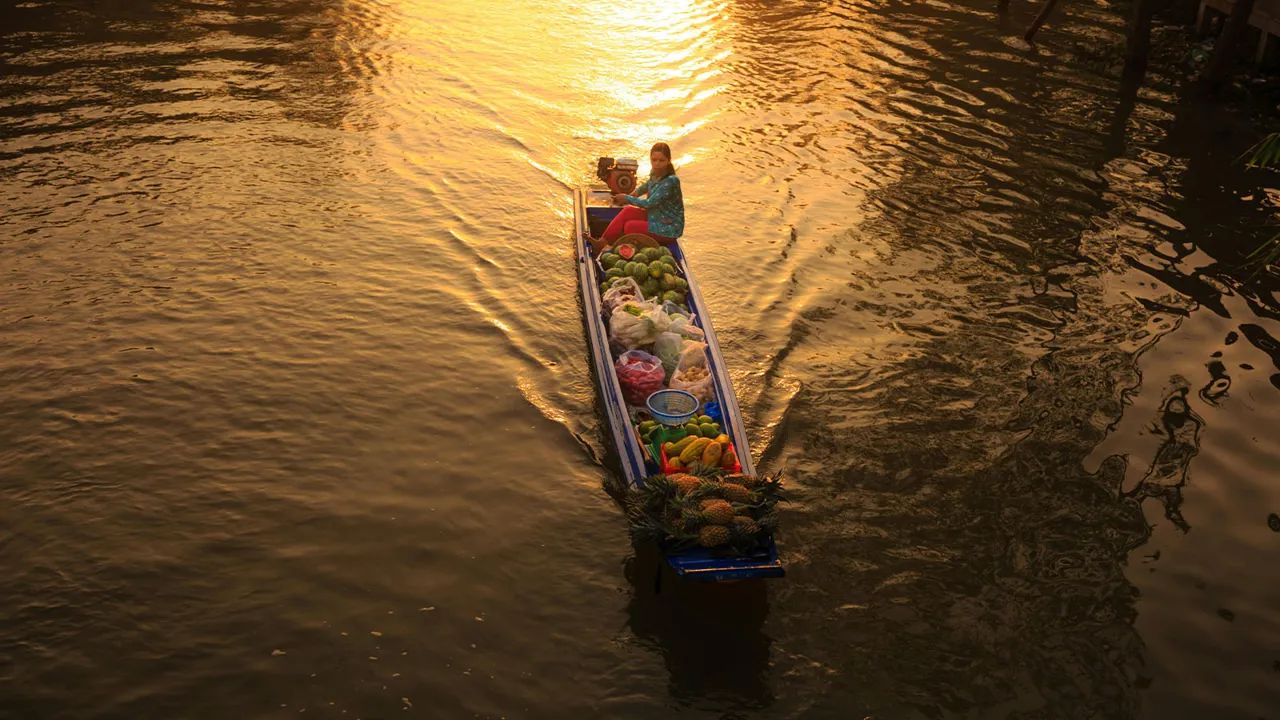
Vietnam Itinerary 2 Weeks
Hanoi - Ninh Binh - Lao Cai - Sapa - Muong Hum market - Ha Long Bay - Hue - Danang - Hoi An - Saigon - Mekong Delta - Cai Rang floating market - Departure

The Best of Ha Giang Trekking Tours
Discover Ha Giang on trekking tours where you live local life, enjoy breathtaking views and escape the crowded routes.

Vietnam and Laos 14 days
Saigon - My Tho - Da Nang- Hoian – Hue - Hanoi - Halong Bay - Vientiane Luang Prabang - Pak Ou – Khuang Si - Luang Prabang – Departure
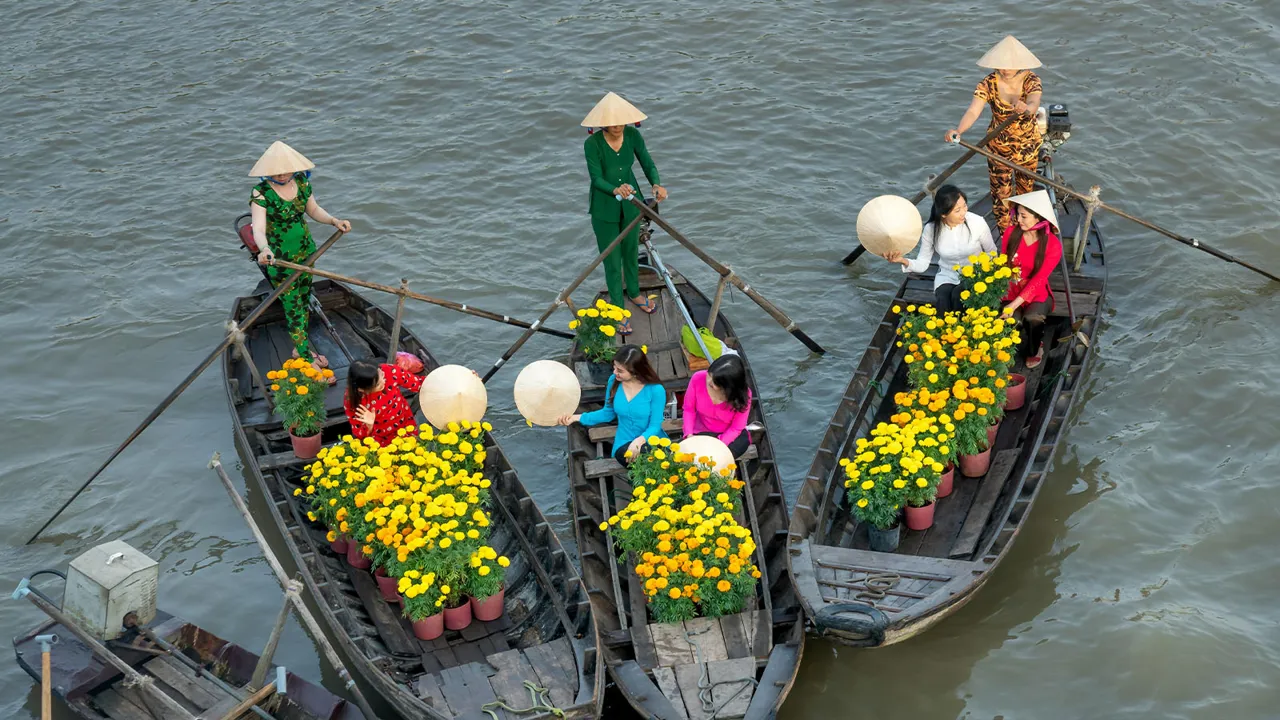
Vietnam Cambodia Itinerary 14 Days
Hanoi – Hoa Binh – Mai Chau – Ninh Binh – Halong bay – Hue - Danang – Hoian – Saigon – Ben Tre - Can Tho – Saigon - Siem Reap Angkor - Tonlé Sap - Siem Reap – Ta Prohm - Departure

Authentic Hoang Su Phi Trekking Tours
Hoang Su Phi trekking tours take you to stunning terraces, meet few tourists, connect with locals and enjoy authentic culture.

Honeymoon Tour Packages In Vietnam 12 Days
Saigon Arrival - City Tour – Mekong Delta – Danang – Hoian - by flight - Da Nang – Hanoi - by flight – Halong - overnight on junk – Departure
Are you interested in this tour?

Our testimonials
Whether it's a short or long tour, to discover must-see sites or to travel less-traveled paths, by car, junk, on foot, by bike or by motorbike... upon their return from their trip to Indochina, our clients tell us about their experiences. We thank them for entrusting us with the organization of their stay in Vietnam, Cambodia, Laos, Thailand and Myanmar!
Tailor-made trips to Vietnam
Are you a couple, a family, a group of friends? Are you planning a trip to Vietnam and/or Southeast Asia? Or maybe you want an individual, personalized trip, operated directly by a local agency? Perhaps you're thinking of a customized trip accompanied by a perfectly French-speaking guide and a private car with a professional driver... Are you the kind of traveler who likes to go where others don't? Our tailor-made tours adapt to your desires, your choices, your pace and your budget.... You decide, we create a trip that suits you!

Don't miss anything from Southeast Asia
The press talks about us



Comment
No comments yet. Be the first to leave a comment!